

The name Willow has quietly transformed from a simple nature-inspired word into one of the most beloved modern names in the English-speaking world. Soft, graceful, and deeply symbolic, it carries the image of flowing branches dancing in the wind beside a calm riverbank. Yet behind its beauty lies a rich history connected to mythology, literature, spirituality, and even personality psychology. Parents today are increasingly drawn toward names that feel meaningful rather than merely fashionable, and Willow sits perfectly at that crossroads between timeless elegance and modern charm.
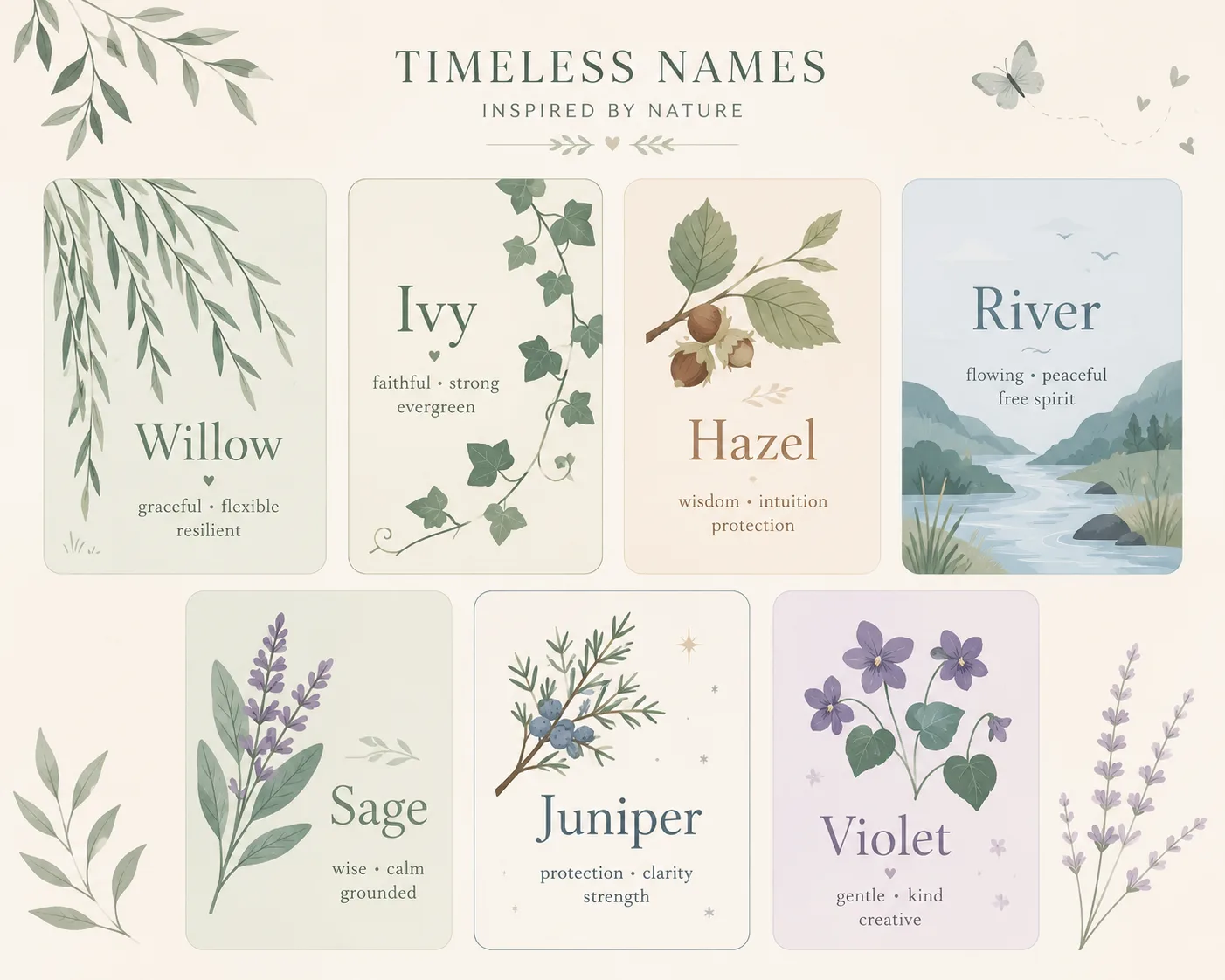
Recent baby-name data from the U.S. Social Security Administration shows that Willow continues climbing the popularity charts in America and several other English-speaking countries. In the United States, the name ranked among the top girl names in recent years and remains a strong favorite among parents seeking nature-inspired names. The rise of botanical names like Violet, Hazel, Ivy, and Willow reflects a broader cultural shift toward names associated with nature, emotional softness, and individuality.
Before choosing a name, most people want to know more than just its definition. They want to understand its emotional tone, symbolic meaning, and long-term appeal. Does the name sound sophisticated? Does it age well? Does it carry positive symbolism? Willow answers “yes” to all of these questions in a surprisingly powerful way.
The Literal Meaning Behind the Name Willow
At its core, the name Willow comes directly from the willow tree, one of the most visually poetic trees found in nature. The willow tree is famous for its sweeping branches and flexible limbs that bend gracefully with the wind rather than breaking against it. Because of this natural image, the name immediately evokes softness, resilience, adaptability, and peace. Unlike many names that require deep historical digging to uncover meaning, Willow’s symbolism is instantly accessible. You hear the name and almost immediately picture nature, serenity, and elegance.
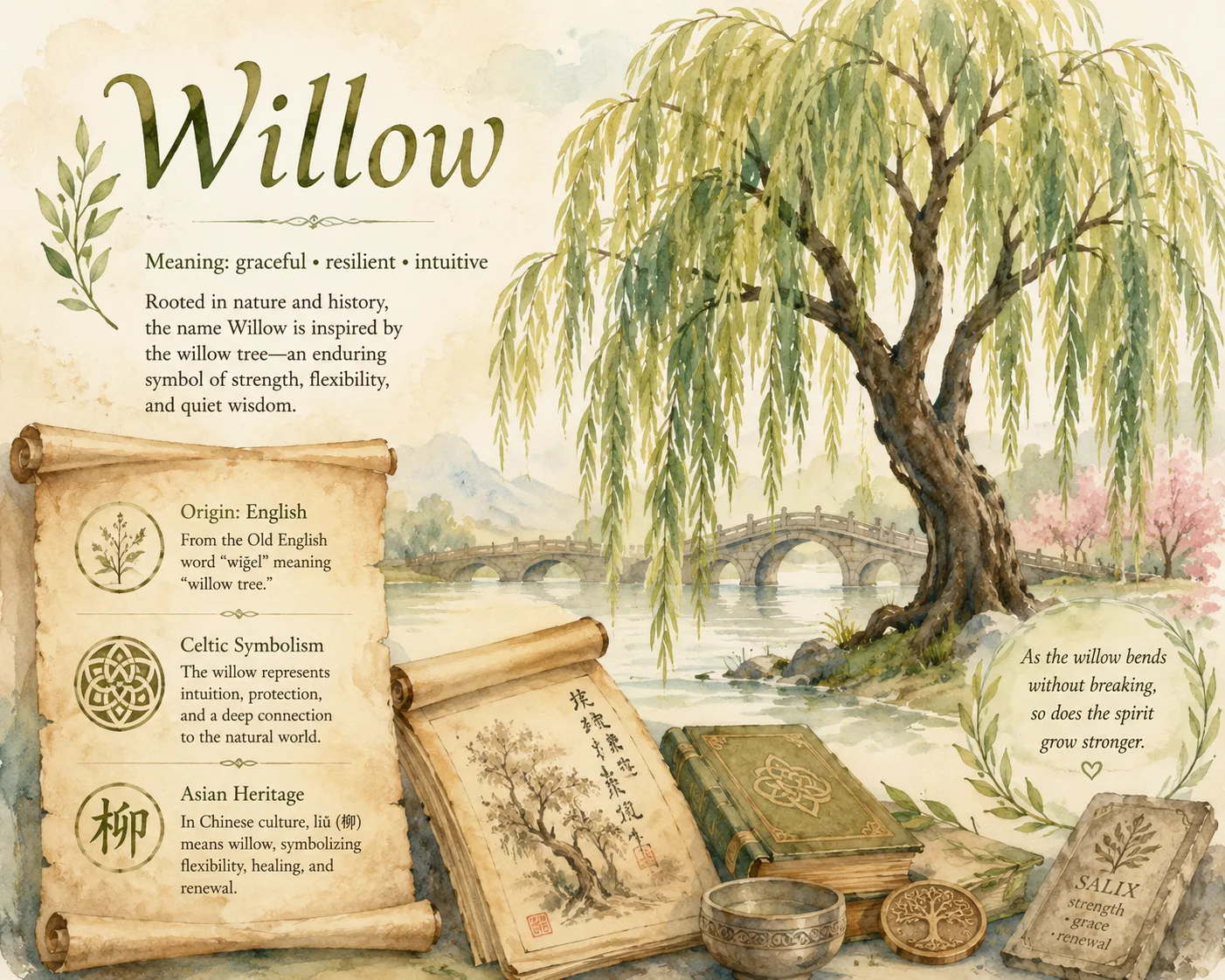
The word itself originates from Old English forms such as “welig” or “wilwe,” which evolved into the modern English term “willow.” Linguistically, the name has Germanic roots tied to water-loving trees commonly found near rivers and lakes. That connection to water adds another layer of symbolism because water traditionally represents emotion, intuition, healing, and life. It’s fascinating how one simple botanical name can quietly carry so many emotional associations beneath the surface.
Parents are often drawn to Willow because it feels gentle without sounding weak. Some names lean too heavily toward delicacy and risk sounding overly fragile, while others aim for strength and lose warmth in the process. Willow balances both qualities beautifully. It sounds calm yet confident, artistic yet grounded. It feels modern while also carrying an old-soul quality that gives it staying power.
The appeal also lies in its versatility. Willow works wonderfully for children, teenagers, and adults alike. A common challenge with trendy names is imagining them aging gracefully over decades. Willow avoids that issue because it has enough elegance and maturity to remain suitable throughout every stage of life. That flexibility is one major reason the name continues climbing popularity charts across multiple countries.
The Historical Origins Behind the Name
Although Willow feels incredibly modern today, its roots stretch back much further than many people realize. Trees have held sacred importance in cultures around the world for thousands of years, and the willow tree specifically carried strong symbolic meanings in ancient societies. In Celtic traditions, willow trees were linked to intuition, moon energy, healing, and feminine wisdom. The Celts viewed certain trees almost as spiritual bridges connecting humans to deeper emotional and mystical understanding.
In ancient China, the willow tree symbolized immortality, renewal, and resilience. People often associated willow branches with protection and rebirth. Meanwhile, in Japanese culture, willow imagery appeared in poetry and art as a symbol of grace, beauty, and quiet emotional depth. Ancient Greek mythology also referenced willow trees in relation to goddesses, mourning rituals, and emotional transformation. Across cultures, the willow consistently represented adaptability and emotional endurance rather than brute force.
As a personal name, Willow is relatively newer compared to classic names like Elizabeth or Catherine. It began gaining noticeable traction in English-speaking countries during the late twentieth century, especially as nature-inspired names started becoming fashionable. The rise accelerated dramatically in the 2000s as parents increasingly moved away from overly formal traditional names and embraced softer, more organic choices.
A major cultural shift helped fuel this trend. Modern parents often seek names that feel authentic, emotionally meaningful, and connected to individuality rather than rigid tradition. Willow perfectly fits this modern naming philosophy. It carries natural beauty without sounding eccentric. It feels artistic without becoming difficult to pronounce or spell. Those qualities made it an ideal candidate for widespread popularity in the digital age.
The numbers reflect that growing appeal. Willow entered the U.S. Top 1000 baby names around the year 2000 and steadily climbed over the following decades. It eventually reached impressive national rankings and continues to maintain strong momentum today.
Symbolism Connected to the Willow Tree
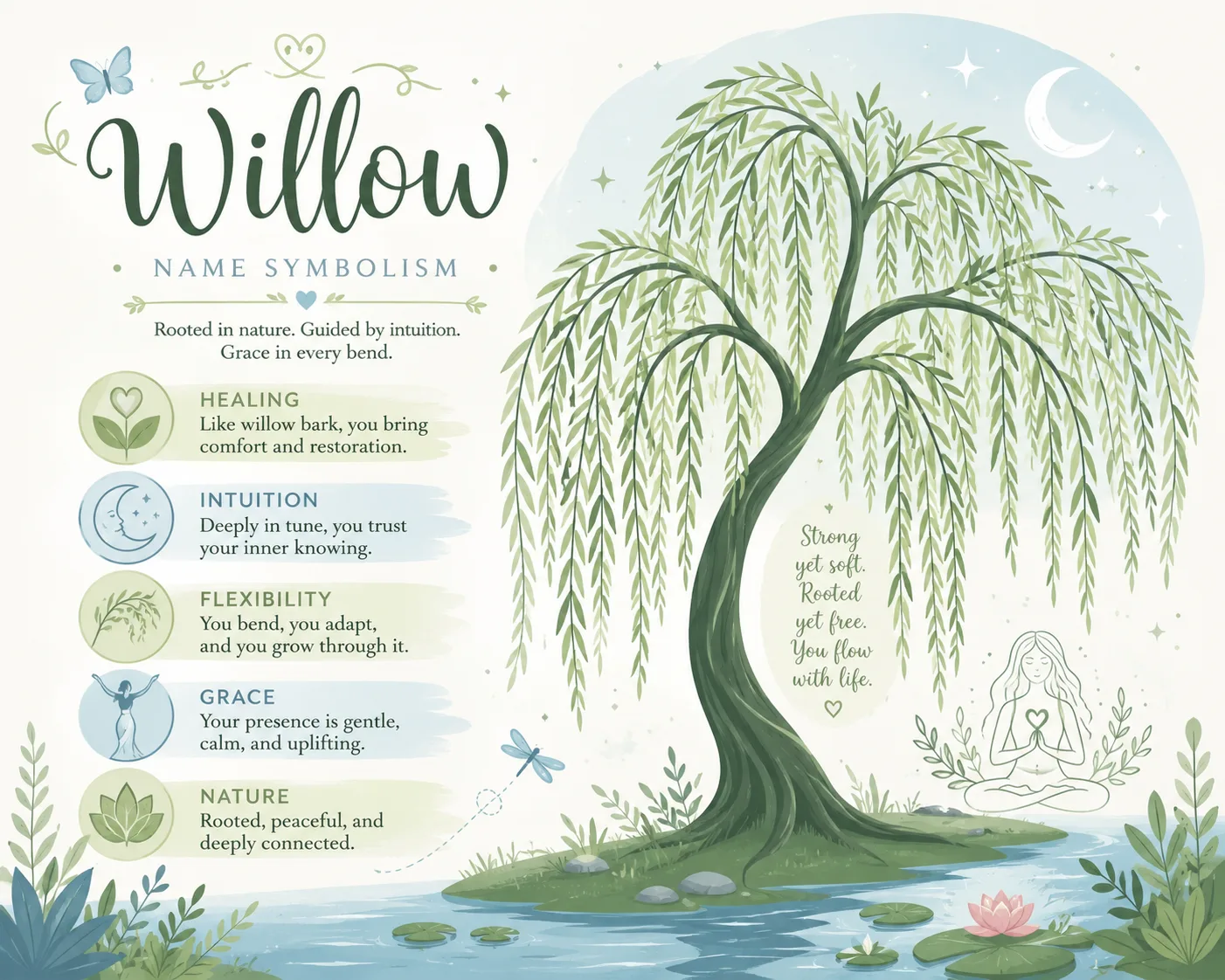
Few names carry symbolism as rich and layered as Willow. The willow tree itself has inspired poets, spiritual traditions, artists, and storytellers for centuries because it visually embodies emotional resilience. Unlike rigid trees that snap during storms, the willow bends with changing conditions. That flexibility became a metaphor for surviving life’s hardships through adaptability rather than resistance.
One of the strongest symbolic meanings tied to Willow is emotional strength. The name suggests someone who can navigate challenges gracefully while remaining compassionate and emotionally aware. There’s something quietly powerful about that image. It’s the difference between surviving through aggression versus surviving through wisdom and resilience. In a world that increasingly values emotional intelligence, this symbolism resonates strongly with modern parents.
Willow trees are also deeply connected to healing and intuition. Historically, willow bark was used medicinally because it contains salicin, a compound related to aspirin. Long before modern pharmaceuticals existed, willow bark served as a natural remedy for pain and fever. Because of this historical use, the willow became associated with healing, restoration, and gentle care. That symbolism subtly transfers into the name itself.
Spiritually, willow trees often represent feminine energy, mystery, and lunar symbolism. Their flowing branches resemble movement, emotion, and fluidity. Unlike towering oak trees that symbolize dominance and strength, willows represent emotional grace and wisdom. That softer symbolism appeals to parents seeking names that feel nurturing yet sophisticated.
The symbolism becomes even more powerful when combined together:
| Symbolism | Meaning Associated With Willow |
|---|---|
| Flexibility | Ability to adapt and endure |
| Healing | Emotional and physical restoration |
| Grace | Quiet elegance and beauty |
| Intuition | Emotional intelligence and wisdom |
| Nature | Peace, harmony, and grounding |
| Femininity | Gentle yet resilient energy |
This layered symbolism explains why Willow feels meaningful rather than simply trendy. Many names rise quickly because they sound fashionable, but Willow offers emotional depth that gives it lasting emotional appeal.
Personality Traits Often Associated With Willow
People naturally connect names with personality expectations, even when they don’t consciously realize it. Willow tends to evoke images of someone artistic, calm, emotionally intelligent, and quietly confident. While no name determines personality, cultural associations absolutely influence perception, and Willow carries overwhelmingly positive emotional energy.
One commonly associated trait is creativity. Willow sounds imaginative and artistic almost immediately. It feels like the name of someone who enjoys music, writing, painting, or other forms of self-expression. Part of this association comes from the tree’s strong presence in poetry and visual art throughout history. The name feels cinematic and literary at the same time, which naturally creates creative associations.
Another personality trait linked to Willow is emotional intelligence. The name gives the impression of someone empathetic, thoughtful, and intuitive. Instead of sounding loud or aggressive, it carries calm emotional warmth. Many parents today specifically seek names with softer emotional energy because they want names that encourage compassion and individuality rather than dominance.
Willow is also associated with independence and inner peace. It feels grounded without being rigid. There’s a subtle free-spirited quality to the name, almost like someone walking barefoot through nature with complete confidence in who they are. That image resonates strongly with modern cultural values emphasizing authenticity and emotional wellness.
The personality associations surrounding Willow are especially appealing because they avoid extremes. The name doesn’t sound overly rebellious, overly delicate, overly formal, or overly trendy. It occupies a rare middle ground where it feels approachable, intelligent, stylish, and emotionally balanced all at once.
This emotional versatility is one reason Willow appeals across different personality types and parenting styles. Whether someone prefers artistic names, spiritual names, elegant names, or modern names, Willow comfortably fits multiple categories without losing its distinct identity.
Cultural and Literary Connections Through Time
The name Willow has appeared across literature, film, music, and popular culture in ways that continually reinforce its emotional symbolism. Literature especially played a huge role in shaping public perception of willow imagery. Poets frequently used willow trees to symbolize longing, beauty, melancholy, and emotional reflection. In classic literature, willow branches often appeared in scenes involving contemplation, love, or emotional transformation.
One famous example appears in Shakespeare’s works, where willow symbolism connects with heartbreak and emotional sorrow. Over time, though, the tree evolved beyond sadness into broader representations of wisdom and resilience. Modern interpretations now focus more heavily on healing, emotional intelligence, and natural beauty.
The entertainment world also helped popularize the name. Characters named Willow frequently appear as thoughtful, magical, artistic, or emotionally perceptive individuals. One of the most recognizable examples is Buffy the Vampire Slayer, which featured the beloved character Willow Rosenberg. That character strongly influenced how an entire generation viewed the name because she embodied intelligence, kindness, emotional depth, and personal growth.
Celebrity influence added another boost to Willow’s popularity. Willow Smith, daughter of Will Smith and Jada Pinkett Smith, brought modern visibility to the name. Her artistic identity and unconventional style reinforced the perception of Willow as creative, expressive, and contemporary.
The name also appears frequently in fantasy storytelling because it naturally sounds mystical and atmospheric. Writers often choose Willow for characters connected to nature, magic, or emotional sensitivity. That recurring usage deepens the name’s cultural identity over time.
Even music contributes to Willow’s popularity. Taylor Swift’s song Willow introduced the name to millions of listeners through dreamy lyrical imagery tied to romance and destiny. Pop culture exposure like this helps names remain emotionally relevant across generations.
Why the Name Willow Continues to Grow in Popularity
Willow’s growing popularity is not random. It reflects broader cultural trends shaping how modern parents think about names. One major factor is the rise of nature-inspired naming. Today’s parents increasingly prefer names connected to forests, flowers, rivers, and celestial imagery because those names feel calming and meaningful in an increasingly digital world.
Names like Ivy, Hazel, River, Violet, and Juniper have all gained momentum in recent years. Willow fits perfectly into this category while standing out because it combines softness with sophistication. According to recent baby-name data, Willow remains one of the strongest-performing nature names in the United States and other English-speaking countries.
Another reason for Willow’s popularity is its sound. Phonetically, modern naming trends favor softer consonants and flowing vowels. Willow feels smooth and melodic when spoken aloud. Compare it to sharper traditional names, and you can hear the difference immediately. Modern parents often prefer names that sound emotionally warm rather than overly formal or harsh.
Social media has amplified this trend dramatically. Platforms like Instagram, TikTok, and Pinterest have created massive interest in aesthetically pleasing names associated with cottagecore lifestyles, nature imagery, emotional wellness, and artistic individuality. Willow fits that aesthetic perfectly. It feels like the verbal equivalent of soft sunlight through trees or a handwritten poem beside a lake.
Celebrity culture also plays a significant role in naming trends. High-profile figures using nature-inspired names help normalize them for mainstream audiences. Once rare names enter celebrity culture, they often rapidly transition into broader public acceptance.
The strongest reason Willow continues thriving may simply be balance. It feels unique without becoming strange. It feels modern without sounding invented. It feels elegant without becoming pretentious. Very few names achieve all those qualities simultaneously, which gives Willow exceptional staying power in modern naming culture.
Variations and Related Names Worth Knowing
Although Willow itself is already beautifully distinctive, many parents explore related names and variations before making a final choice. Some prefer international alternatives, while others look for names carrying similar emotional or botanical energy.
Unlike traditional names with countless historical variants, Willow remains fairly consistent across languages because it originates from an English botanical term. Still, related nature-inspired names have become increasingly popular alongside Willow.
Here are several names commonly associated with Willow:
| Related Name | Style and Meaning |
|---|---|
| Ivy | Elegant botanical name symbolizing fidelity |
| Hazel | Vintage nature name linked to wisdom |
| Juniper | Playful tree-inspired modern name |
| River | Gender-neutral nature name tied to flow |
| Violet | Floral name symbolizing creativity |
| Rowan | Tree-inspired name associated with protection |
| Aspen | Modern mountain-tree inspired name |
| Sage | Herbal name connected to wisdom |
Parents who love Willow often appreciate names with similar emotional tones: peaceful, grounded, artistic, and nature-centered. These names collectively represent a wider cultural movement away from rigidly traditional naming patterns toward softer, more expressive identities.
Some families also use Willow as a middle name because of its melodic quality. It pairs especially well with classic first names like Charlotte Willow, Eleanor Willow, or Amelia Willow. At the same time, Willow works beautifully as a standalone first name because it already feels complete and emotionally rich on its own.
The name’s flexibility is another major advantage. It suits different personalities, lifestyles, and aesthetics without feeling restricted to one specific cultural image. Whether someone imagines a future artist, scientist, writer, entrepreneur, or adventurer, Willow still feels appropriate and believable.
Is Willow the Right Choice for Your Needs?
Choosing a name is deeply personal because names carry emotional, cultural, and practical significance for decades. Willow stands out because it successfully combines beauty, symbolism, modern appeal, and long-term versatility. It feels emotionally warm while still sounding mature enough for adulthood. That balance is surprisingly difficult to find.
One major strength of Willow is memorability. The name feels recognizable without becoming overly common. It’s familiar enough that most people immediately know how to spell and pronounce it, yet distinctive enough to feel special. Parents often struggle to find names that achieve both familiarity and uniqueness simultaneously.
Another advantage is the positive symbolism surrounding the willow tree itself. The associations with resilience, flexibility, healing, and emotional wisdom create a strong emotional foundation for the name. Many people want names that carry encouraging symbolism because names often shape first impressions and emotional identity over time.
Still, no name is perfect for everyone. Some people may feel Willow leans too heavily into modern nature trends, especially if they prefer highly traditional names rooted in religion or historical royalty. Others might worry about its increasing popularity reducing uniqueness in the future. These concerns are valid because naming preferences are deeply subjective.
The best way to evaluate Willow is to imagine it across different stages of life. Does it sound natural for a child? A teenager? A professional adult? In Willow’s case, the answer is usually yes. That adaptability gives the name impressive long-term value.
At the emotional level, Willow offers something many names lack: atmosphere. It creates a feeling the moment you hear it. Some names merely identify people. Willow tells a quiet story.
Conclusion
Willow has evolved from a simple tree name into one of the most emotionally resonant modern names in the English-speaking world. Rooted in ancient symbolism and strengthened by cultural, literary, and artistic connections, the name carries meanings tied to resilience, healing, grace, creativity, and emotional intelligence. It represents adaptability rather than force, quiet confidence rather than loud dominance.
Its popularity continues growing because modern parents increasingly seek names with authenticity and emotional depth. Willow feels natural, elegant, artistic, and timeless all at once. It fits modern naming trends while still carrying enough symbolic richness to avoid feeling temporary or disposable.
The name’s greatest strength may be its balance. It sounds gentle without weakness, sophisticated without arrogance, and modern without artificiality. That rare combination explains why Willow continues capturing attention across generations and cultures.
For anyone searching for a name connected to nature, emotional symbolism, beauty, and individuality, Willow remains one of the strongest choices available today.
FAQs
Is Willow mainly a girl’s name?
Willow is primarily used as a girl’s name, especially in English-speaking countries, though it occasionally appears as a gender-neutral choice. Recent popularity rankings show it remains significantly more common for girls.
What does the willow tree symbolize spiritually?
Spiritually, the willow tree symbolizes emotional healing, intuition, flexibility, feminine energy, and resilience. Many cultures historically connected willow trees with wisdom and renewal.
Why has Willow become so popular recently?
Willow’s popularity increased because of modern interest in nature-inspired names, celebrity influence, social media aesthetics, and the growing preference for softer, emotionally meaningful names.
Is Willow considered a classic or modern name?
Willow is technically modern as a personal name, but its symbolism and botanical origins give it a timeless quality that helps it feel more enduring than many trendy names.
What middle names work well with Willow?
Willow pairs beautifully with classic names such as Grace, Rose, Elizabeth, Claire, James, or Marie. It also works well with shorter minimalist middle names because of its flowing rhythm.

American content writer and blogger based in Boise, Idaho, age 29. Dorian specializes in creating well-researched digital content focused on lifestyle, technology, and online resources. With several years of professional writing experience, he is known for translating complex topics into practical, reader-friendly articles. He regularly contributes editorial content for nicknamez.xyz while emphasizing accuracy, transparency, and trustworthy research.