

Texting has created an entirely new language. One minute you understand every message in your inbox, and the next minute someone sends “HYD?” and suddenly you feel like you missed a secret internet meeting. Modern digital conversations move incredibly fast, and abbreviations like HYD are part of the reason why. They shorten communication, make chats feel casual, and help people keep conversations flowing without typing long sentences every few minutes.
The phrase has become increasingly common across messaging apps, social media platforms, online dating conversations, and gaming chats. Recent online discussions and slang-tracking websites show that HYD most commonly means “How You Doing?” in casual conversations. People use it as a quick check-in, much like saying “How are you?” or “What’s up?” in real life.
What makes internet slang fascinating is how a tiny abbreviation can completely change tone depending on context. HYD can sound friendly, flirtatious, polite, sarcastic, or even awkward depending on who sends it and when. Understanding how it works is less about memorizing letters and more about understanding digital culture itself. Text abbreviations are basically the emojis of language; they compress emotion, tone, and intent into tiny packages.
Before diving into examples and meanings, let’s organize the full breakdown of HYD in a clear structure.
Understanding the Basic Meaning of HYD
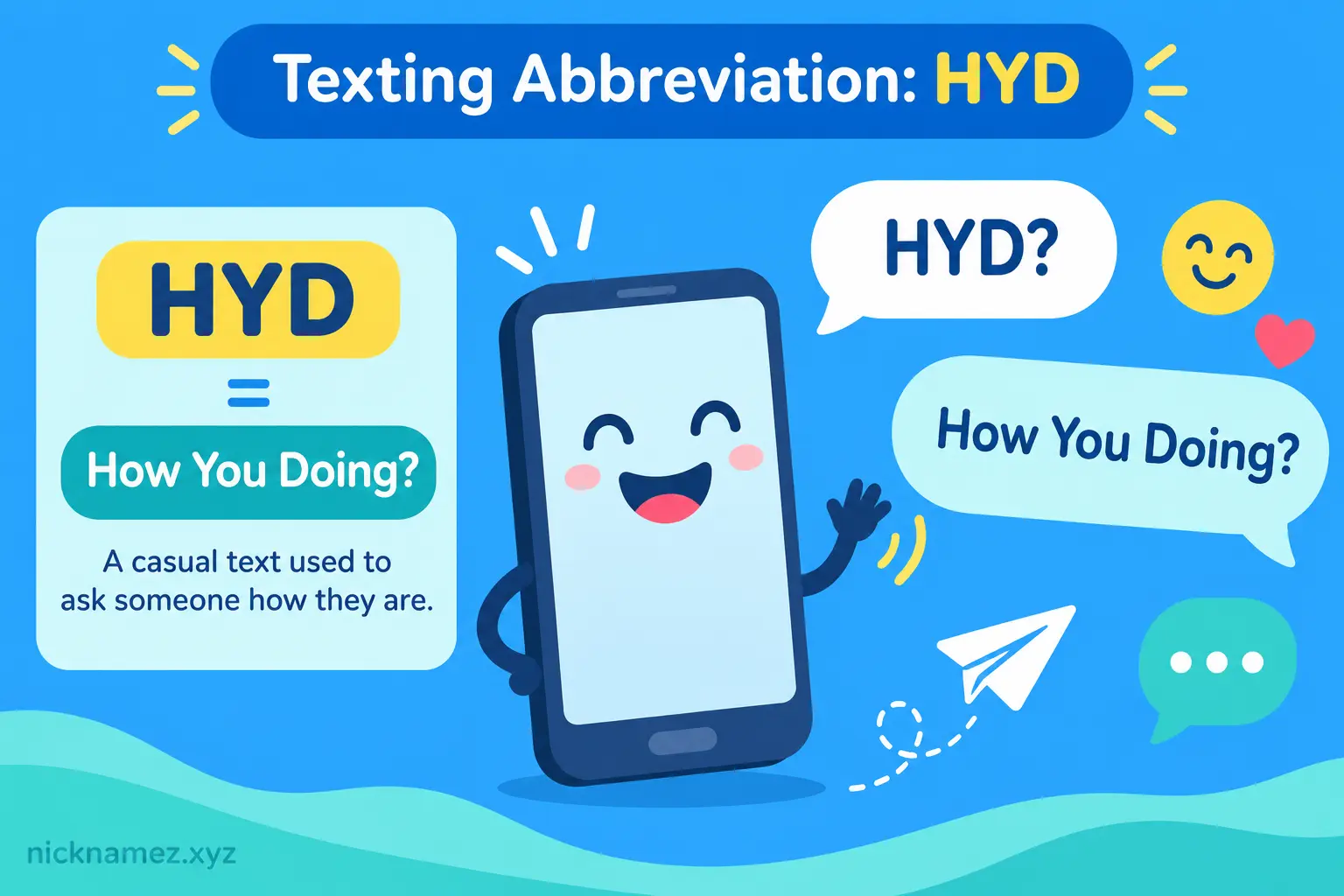
At its core, HYD usually means “How You Doing?” This is the definition most commonly referenced across texting slang guides and modern messaging discussions. It works as a fast, informal greeting that lets someone check in without typing a full sentence. Instead of writing “Hey, how are you doing today?” people compress the thought into just three letters.
Think about how people talk in real life. Most casual conversations already use shortcuts. Someone says “What’s up?” instead of “What activities are currently occupying your time?” Texting simply pushes that habit even further. HYD is part of a huge ecosystem of internet shorthand that includes expressions like LOL, BRB, WYD, and IDK. The goal is speed, simplicity, and tone.
What makes HYD interesting is that it sounds conversational rather than robotic. Even though it is abbreviated, it still feels personal. When someone texts “HYD?” it often feels warmer than a dry “Status?” or a formal “How are you?” That emotional flexibility is one reason abbreviations survive online. They carry personality despite using fewer letters.
Recent online trend articles suggest that people frequently encounter HYD on platforms like Snapchat, Instagram, WhatsApp, Discord, and dating apps. The abbreviation has become especially common among younger users who grew up with rapid-fire messaging culture. For them, abbreviations are not laziness; they are simply the normal rhythm of digital conversation.
Why People Shorten Words in Texting
The internet didn’t invent shortened communication, but it definitely accelerated it. Back in the early days of SMS messaging, character limits forced people to condense their thoughts into tiny chunks. Old mobile phones with T9 keyboards also made typing painfully slow. Reddit users discussing classic abbreviations often point out that texting culture evolved because typing entire sentences used to take much more effort.
That history still shapes communication today. Even though modern phones have excellent keyboards and voice typing, people continue using abbreviations because they create conversational efficiency. Typing “HYD” takes a second. Typing “How are you doing today?” takes longer and feels more formal. Online culture values speed and rhythm, especially during casual chats.
There’s also a psychological reason behind text shortcuts. Abbreviations create a sense of belonging. Knowing terms like HYD makes users feel connected to internet culture, almost like understanding inside jokes within a social group. When someone instantly recognizes slang, it signals digital fluency. It’s similar to understanding local expressions while traveling in another country.
At the same time, slang evolves constantly. One generation’s normal texting style can confuse another generation entirely. A Reddit thread about misunderstood abbreviations shows how easy it is for online shorthand to create confusion instead of clarity. That tension is exactly why articles about meanings like HYD continue trending online year after year.
The Rise of Texting Abbreviations
Text abbreviations exploded alongside instant messaging platforms. During the early 2000s, services like AOL Instant Messenger and SMS texting trained users to communicate in compressed formats. Over time, those shortcuts spread into social media, gaming communities, and eventually everyday life. According to recent slang trend discussions, abbreviations are still evolving rapidly because modern platforms reward fast interaction.
Apps like Snapchat and Instagram encourage quick responses. Messages disappear, notifications stack up, and conversations move quickly. In that environment, shorthand becomes practical. HYD fits perfectly into that style because it is short, flexible, and conversational.
Interestingly, abbreviations also shape tone. Writing a complete sentence with punctuation can sometimes feel unusually serious online. Compare these two messages:
- “How are you doing today?”
- “HYD?”
The first sounds careful and formal. The second sounds relaxed and casual. That difference matters more than people realize. Digital communication lacks facial expressions and vocal tone, so tiny wording changes become emotional signals.
Social media culture also encourages linguistic creativity. New abbreviations appear constantly, while older ones fade away. Some survive because they are genuinely useful. HYD survives because people naturally ask each other how they are doing. The phrase compresses an everyday social ritual into something fast enough for modern messaging habits.
When People Commonly Use HYD
People use HYD in several specific situations. The most common is the casual conversation opener. Someone sends “HYD?” the same way they might casually wave hello in person. It works as an icebreaker that invites conversation without demanding a detailed response.
Friends often use HYD after not speaking for a while. Imagine getting a text saying, “Hey stranger, HYD?” The abbreviation softens the interaction. It feels friendly rather than intense. This is especially common on social media apps where reconnecting happens casually and unexpectedly.
HYD also appears frequently in flirtatious conversations. Because “How you doing?” already carries a playful tone in spoken English, the abbreviation inherits some of that energy. On dating apps, HYD can function almost like digital small talk. It opens the door to further conversation without sounding overly formal or emotionally heavy.
Some users interpret HYD differently depending on context. Certain slang guides mention alternative meanings such as “How’s Your Day?” or “Have You Done?” although these are less common than “How You Doing?” This flexibility explains why context matters so much in texting culture. The surrounding conversation usually reveals the intended meaning instantly.
People also use HYD during emotional check-ins. A friend who knows you had a stressful week might text “HYD?” as a gentle way to see how you’re coping. In those moments, the abbreviation becomes surprisingly human. Despite being only three letters long, it can carry genuine care and attention.
Different Interpretations Based on Context
The fascinating thing about internet slang is that meaning rarely exists in isolation. Tone, platform, relationship, and timing all influence interpretation. HYD is a perfect example because different contexts slightly shift its meaning.
Most commonly, HYD means “How You Doing?” That interpretation dominates current online slang usage. Still, some users interpret it as “How’s Your Day?” especially when sent later in the evening after someone finishes work or school. Others occasionally use it as shorthand for “Have You Done…” when discussing tasks or assignments.
The relationship between sender and receiver changes the tone dramatically. If your best friend sends “HYD?” it probably feels casual and friendly. If someone from a dating app sends it, the message might sound flirtatious. If your manager suddenly texts “HYD?” it might feel strangely informal or confusing.
Timing matters too. A random midnight “HYD?” feels very different from a lunchtime check-in. One may sound romantic or emotional, while the other simply sounds conversational. Texting operates almost like digital body language. Tiny details shape emotional interpretation.
This complexity explains why some users occasionally misunderstand abbreviations. Online communication removes vocal cues, facial expressions, and immediate clarification. Without those signals, people rely heavily on context. That’s why slang literacy matters more now than ever before.
Examples of HYD in Everyday Texts
The easiest way to understand HYD is by seeing it used naturally. Real-world examples show how flexible the abbreviation can be depending on tone and setting.
Friendly Conversation
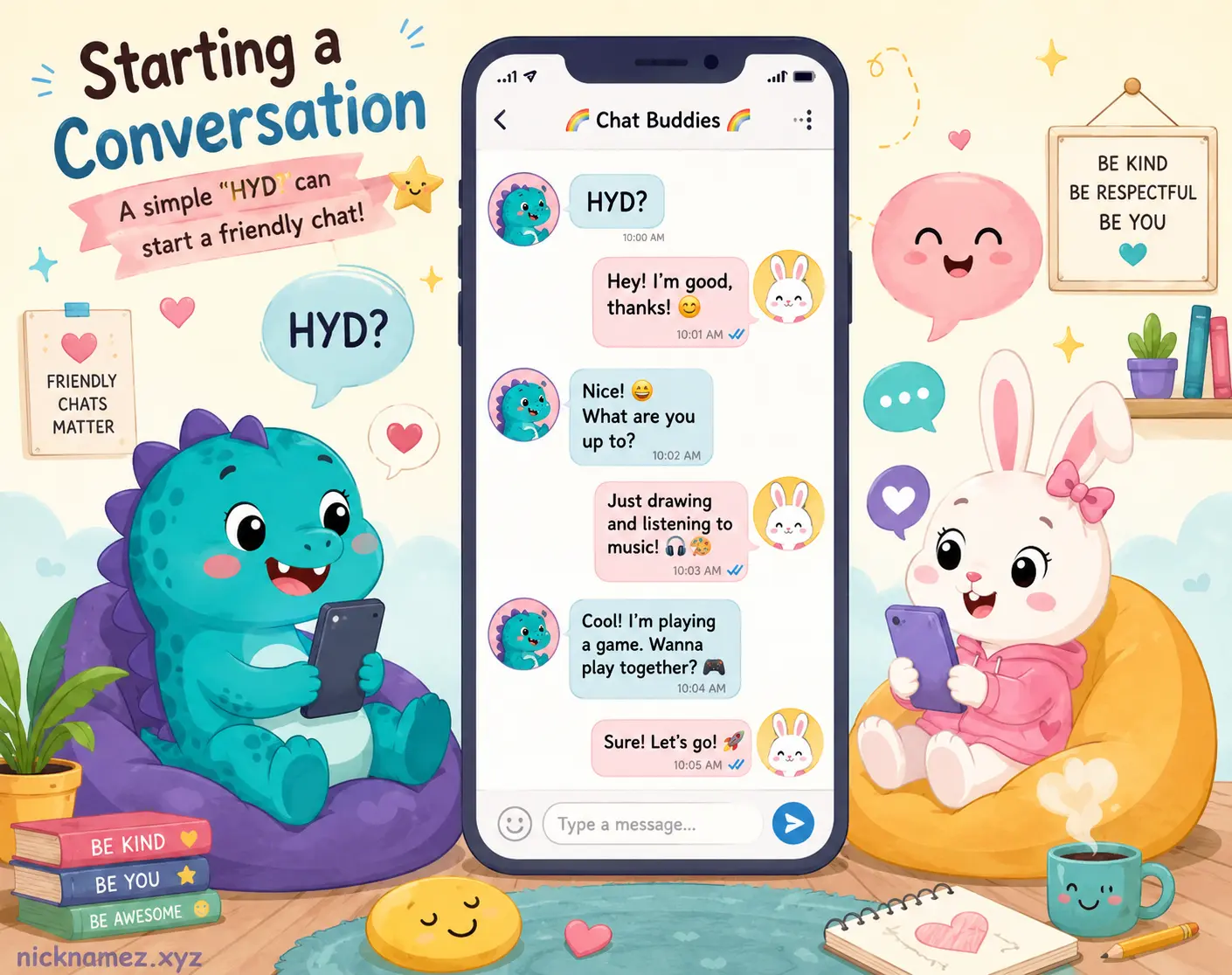
Alex: “Hey! HYD?”
Jordan: “Pretty good. Just finished work. You?”
This is the classic usage. Friendly, casual, and relaxed.
Reconnecting With Someone
Taylor: “Long time no talk lol. HYD these days?”
Chris: “Busy honestly, but doing alright.”
Here, HYD acts as a conversational bridge after time apart.
Social Media DM
User 1: “HYD after the exam?”
User 2: “Mentally exhausted 😭”
Notice how abbreviations often combine with emojis to add emotional context.
Dating App Example
Sam: “Hey 🙂 HYD tonight?”
Jamie: “Good actually. Just watching Netflix.”
In flirtatious settings, HYD can feel playful and inviting.
Task-Related Usage
Friend: “HYD the homework yet?”
Reply: “Almost done.”
This example reflects the rarer “Have You Done” meaning mentioned in some slang guides.
These examples reveal an important truth: abbreviations function almost like social shortcuts. They create immediate familiarity. Instead of sounding rigid or scripted, conversations feel loose and spontaneous.
Similar Shortcuts You May See Online
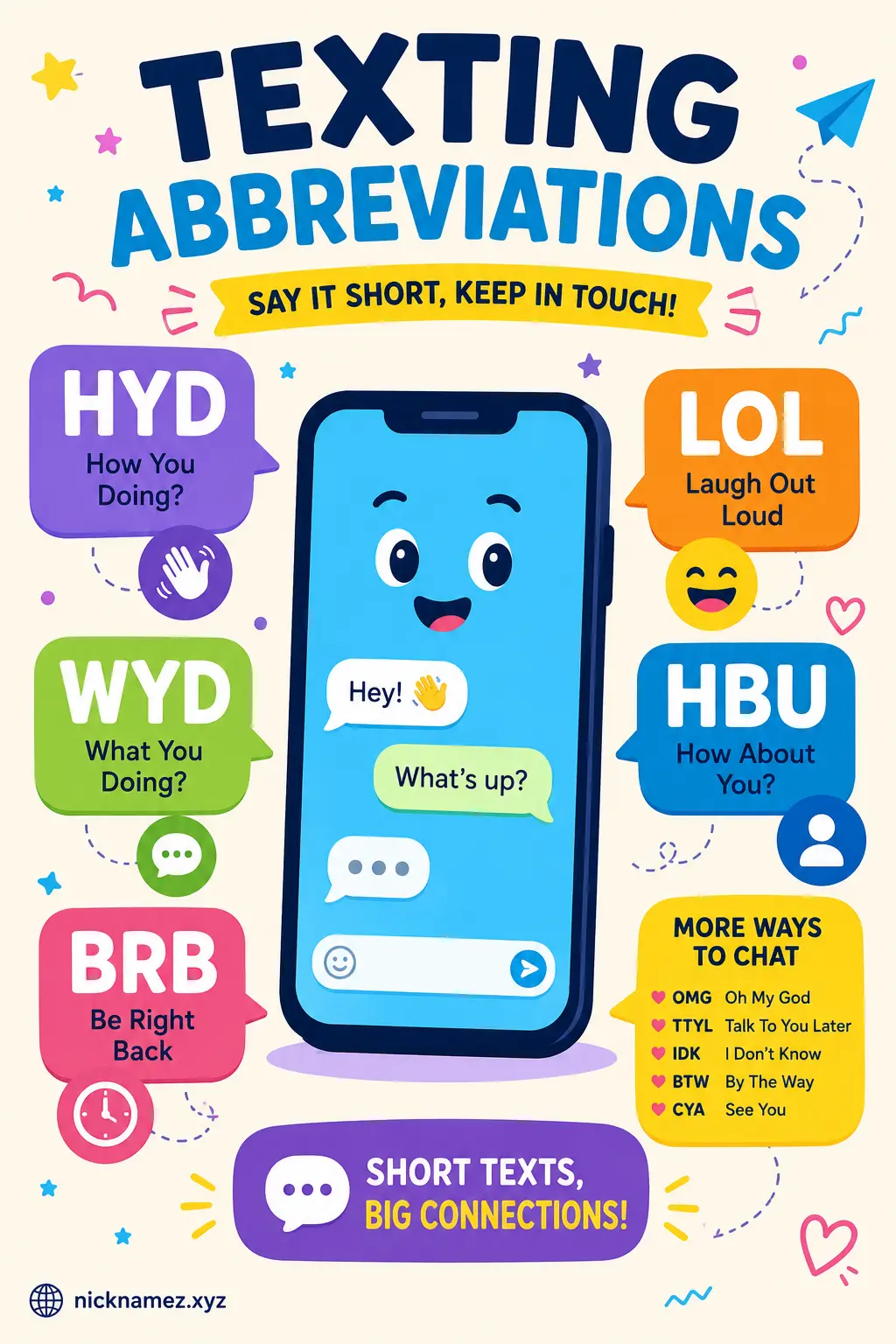
HYD belongs to a massive family of texting abbreviations. Understanding related terms makes online conversations much easier to follow. Some are incredibly common, while others appear mainly within younger internet communities.
| Abbreviation | Meaning | Common Use |
|---|---|---|
| HYD | How You Doing? | Casual greeting |
| WYD | What You Doing? | Asking about activities |
| HBU | How About You? | Returning a question |
| IDK | I Don’t Know | Expressing uncertainty |
| BRB | Be Right Back | Temporary absence |
| LOL | Laugh Out Loud | Humor or amusement |
| HYB | How You Been? | Checking in after time apart |
Recent Reddit discussions about common abbreviations show that many of these shortcuts remain widely used despite constantly changing internet trends. Some survive because they are genuinely useful, while others disappear almost overnight.
WYD is probably the closest cousin to HYD. Instead of asking how someone feels, WYD asks what someone is doing. HBU commonly follows responses, helping conversations bounce naturally between participants.
The internet also creates endless variations. Some users personalize abbreviations within friend groups, gaming communities, or fandoms. That creativity keeps online language evolving at lightning speed.
When Clarification Might Be Needed
Despite their convenience, abbreviations can absolutely create confusion. Not everyone interprets slang the same way, especially across generations, regions, or online communities. One person may instantly recognize HYD, while another stares at the message wondering if it refers to a company, city, or typo.
This confusion becomes more likely when abbreviations have multiple meanings. Some slang references list HYD as “Hey You” or “Have You Done,” although these meanings are less dominant than “How You Doing?” Without context, misunderstandings happen easily.
Professional settings create another challenge. HYD sounds perfectly normal between friends, but it can feel awkward or unclear in formal communication. Imagine receiving “HYD?” from a professor, recruiter, or client. The informality might feel unprofessional or even confusing depending on the relationship.
Generational differences also play a major role. Younger users who grew up online often understand abbreviations instinctively. Older users may find them unnecessary or difficult to decode. Reddit conversations about slang misunderstandings show how frequently people misinterpret internet shorthand.
Sometimes the best approach is simply asking for clarification. Digital communication should make conversations easier, not more stressful. If an abbreviation feels unclear, there is nothing wrong with replying, “What does HYD mean?” Most people appreciate honesty more than fake understanding.
Using Text Abbreviations Naturally
Using abbreviations naturally is less about memorization and more about social awareness. HYD works best in relaxed, conversational environments. Friends, classmates, gaming chats, social media DMs, and dating apps are all places where it feels normal.
The key is matching tone. If someone texts casually, casual replies usually feel appropriate. If someone writes formally, mirroring that style often works better. Communication is like dancing; people unconsciously adapt to each other’s rhythm.
Overusing abbreviations can backfire, though. A message packed with nonstop slang becomes exhausting to decode. Imagine reading something like:
“HYD? WYD later? HBU after BRB lol.”
Technically understandable, but not exactly elegant. Good texting balances clarity with efficiency.
It is also smart to consider audience. Your best friend may love abbreviations, while your coworker might prefer complete sentences. Knowing when to switch styles is a surprisingly valuable communication skill.
Another interesting trend is that some users intentionally avoid abbreviations because they want conversations to feel more personal. Full sentences can communicate effort and emotional investment. That means choosing between “HYD?” and “How are you doing?” sometimes sends its own subtle message.
Language online constantly shifts. New slang appears every month while older terms fade away. HYD remains popular because it fills a universal conversational need: checking in with people quickly and casually. As long as humans keep texting each other, shortcuts like HYD will probably survive in some form.
Conclusion
HYD may only contain three letters, but it represents a much bigger shift in how people communicate online. Most commonly meaning “How You Doing?”, the abbreviation has become a fast, casual way to check in with someone during digital conversations.
Its popularity reflects modern communication habits shaped by texting apps, social media platforms, and internet culture. People want conversations to move quickly while still feeling personal and expressive. HYD achieves that balance surprisingly well.
Context remains everything. Depending on tone and situation, HYD can sound friendly, flirty, caring, playful, or simply conversational. Understanding these subtle shifts helps people navigate online interactions more naturally.
Text abbreviations are not just internet laziness. They are part of an evolving digital language shaped by technology, culture, and human creativity. Learning them is almost like learning slang in any spoken language; you gradually absorb meaning through repeated use and context.
The next time someone texts “HYD?” you will not need to pause and decode the mystery. You’ll understand both the meaning and the social rhythm behind it.
FAQs
1. What does HYD mean in texting?
HYD most commonly means “How You Doing?” It is used as a casual greeting or check-in during online conversations.
2. Is HYD used on social media apps?
Yes. HYD frequently appears on platforms like Snapchat, Instagram, WhatsApp, Discord, and dating apps.
3. Can HYD have different meanings?
Sometimes. While “How You Doing?” is the most common definition, some users also interpret HYD as “How’s Your Day?” or “Have You Done?” depending on context.
4. Is HYD considered formal or informal?
HYD is highly informal. It is best used in casual conversations with friends, acquaintances, or online chats rather than professional communication.
5. How should I respond to HYD?
You can respond naturally, just as you would to “How are you?” Examples include:
- “I’m good, you?”
- “Doing alright today.”
- “Pretty tired honestly lol.”

American blogger and editorial writer from Asheville, North Carolina, age 35. Callum has built a career producing informative articles covering travel, culture, and consumer topics with a strong focus on fact-checking and user value. His experience working with online publications allows him to create engaging, reliable content, and he proudly contributes expert articles for nicknamez.xyz with an emphasis on credibility and practical insight.