

The internet has completely changed the way people communicate. Instead of writing full sentences, people now squeeze entire thoughts into a few letters, emojis, and abbreviations. Acronyms like LOL, TBH, BRB, and IMO became everyday language almost overnight. Now, newer abbreviations appear constantly across texting apps, forums, gaming communities, workplaces, and healthcare systems. That rapid evolution is exactly why many people stop and ask, “What does IOP mean?”
The tricky thing about IOP is that it does not belong to just one world. It is one of those flexible acronyms that changes meaning depending on where you see it. In a hospital, it usually refers to a mental health treatment program. In an eye clinic, it points to eye pressure measurements. In technology discussions, it may describe computing systems or networking concepts. Someone reading social media might even assume it is internet slang. That is where confusion begins.
Modern communication moves fast, and people expect others to understand shorthand instantly. Studies on digital communication trends show that abbreviations and internet acronyms continue growing because they save time and fit naturally into mobile messaging habits. When you combine speed, limited attention spans, and industry-specific jargon, one acronym can suddenly develop multiple identities. It becomes like a chameleon that changes color depending on its surroundings.
This matters more than people realize. Misunderstanding a term like IOP in a medical conversation could completely alter the meaning of what someone is trying to say. Imagine reading a message from a doctor mentioning “IOP levels” and assuming they are talking about therapy instead of eye pressure. Context becomes everything. Understanding the surrounding clues is the key that unlocks the correct interpretation.
The Rise of Internet Slang and Shortened Communication
Digital culture thrives on speed. Texting and social media reward people who communicate quickly and efficiently. Nobody wants to type long explanations when a short acronym can do the job. That behavior created an entire language ecosystem made up of abbreviations, slang, and compressed expressions. Researchers studying online communication have noted that shortened digital speech patterns now influence everyday language, especially among younger users.
Platforms like TikTok, Instagram, Snapchat, Reddit, and X encourage users to keep content short and engaging. Acronyms fit perfectly into that style. Instead of typing “laughing out loud,” people say “LOL.” Instead of “be right back,” they use “BRB.” Over time, these shortcuts become so common that people forget they were once unfamiliar.
The same trend affects professional spaces too. Medical workers, educators, therapists, business analysts, and software engineers all use abbreviations internally. The result is a communication landscape where the same three-letter acronym can mean completely different things depending on who is speaking. That is exactly what happened with IOP.
Why Context Changes the Meaning of IOP
Think of acronyms like actors playing different roles in different movies. The letters stay the same, but the meaning changes based on the setting. If someone says, “My doctor recommended an IOP,” the likely meaning involves therapy or mental health treatment. If another person says, “Your IOP is elevated,” the conversation is probably about eye health and glaucoma testing.
The surrounding words are usually the biggest clue. Words like “therapy,” “recovery,” “mental health,” or “rehab” point toward Intensive Outpatient Program. Terms like “glaucoma,” “eye doctor,” “vision,” or “pressure” point toward Intraocular Pressure. In business or technology conversations, the surrounding vocabulary changes again.
This is why context acts like a flashlight in a dark room. Without it, acronyms can feel impossible to decode. With it, the intended meaning becomes surprisingly obvious.

The Most Common Meaning of IOP in Medical and Mental Health Settings
One of the most recognized meanings of IOP today is Intensive Outpatient Program. This term is widely used in mental health treatment and addiction recovery settings. According to healthcare sources, an Intensive Outpatient Program is a structured treatment system designed for people who need significant therapeutic support without staying overnight in a hospital or rehabilitation center.
Unlike inpatient treatment, where patients live at the facility full-time, an IOP allows individuals to continue many aspects of normal life while receiving treatment several times each week. That flexibility makes it extremely valuable for people balancing work, school, or family responsibilities. It serves as a middle ground between weekly therapy sessions and full residential care.
Mental health professionals often recommend IOPs for conditions such as depression, anxiety disorders, substance abuse recovery, PTSD, eating disorders, and emotional crises. The structure is intentionally intensive but not restrictive. People attend therapy groups, counseling sessions, skill-building workshops, and recovery meetings while still sleeping at home and maintaining daily routines.
This meaning of IOP has become increasingly common in public discussion because awareness of mental health treatment has expanded dramatically in recent years. Therapy and recovery conversations now happen openly online, on podcasts, in workplaces, and across social media. That increased visibility means more people encounter the acronym regularly.
IOP as Intensive Outpatient Program
An Intensive Outpatient Program is designed to help people stabilize emotionally and psychologically while continuing daily life outside a hospital setting. These programs usually involve multiple therapy sessions per week, often lasting several hours each day. Healthcare organizations explain that IOPs commonly include group therapy, individual counseling, educational sessions, and behavioral treatment strategies.
The beauty of an IOP is its balance. Imagine recovery as learning to ride a bicycle. Inpatient treatment is like training wheels with someone holding the seat constantly. Standard therapy is like riding independently. An IOP sits somewhere in the middle, offering support while still allowing movement and independence.
Many patients enter IOP treatment after leaving inpatient care. Others join directly when doctors believe weekly therapy alone is not enough. That flexibility makes IOPs a critical part of the mental health treatment system.
How Intensive Outpatient Programs Work
Most IOPs involve structured schedules that may include three to five treatment days each week. Sessions often last two to four hours daily depending on the program and the patient’s needs. Participants might engage in cognitive behavioral therapy, stress management training, family counseling, addiction recovery support, or medication management.
Here is a simplified comparison:
| Treatment Type | Time Commitment | Overnight Stay | Level of Support |
|---|---|---|---|
| Standard Therapy | 1–2 hours weekly | No | Moderate |
| Intensive Outpatient Program | 9–19 hours weekly | No | High |
| Inpatient Treatment | Full-time | Yes | Very High |
Healthcare experts note that IOP participation has expanded significantly in recent decades because it provides structured care without requiring complete separation from everyday responsibilities.
Situations Where People Commonly Use This Meaning
You will usually hear this definition in healthcare discussions. Someone may say:
- “She started an IOP after leaving rehab.”
- “My therapist recommended an IOP program.”
- “The hospital referred him to an IOP for anxiety treatment.”
In these situations, the meaning is almost always connected to mental health or addiction recovery. The presence of words like “therapy,” “counseling,” “recovery,” or “treatment” acts as a clear clue.
What IOP Means in Eye Care and Ophthalmology
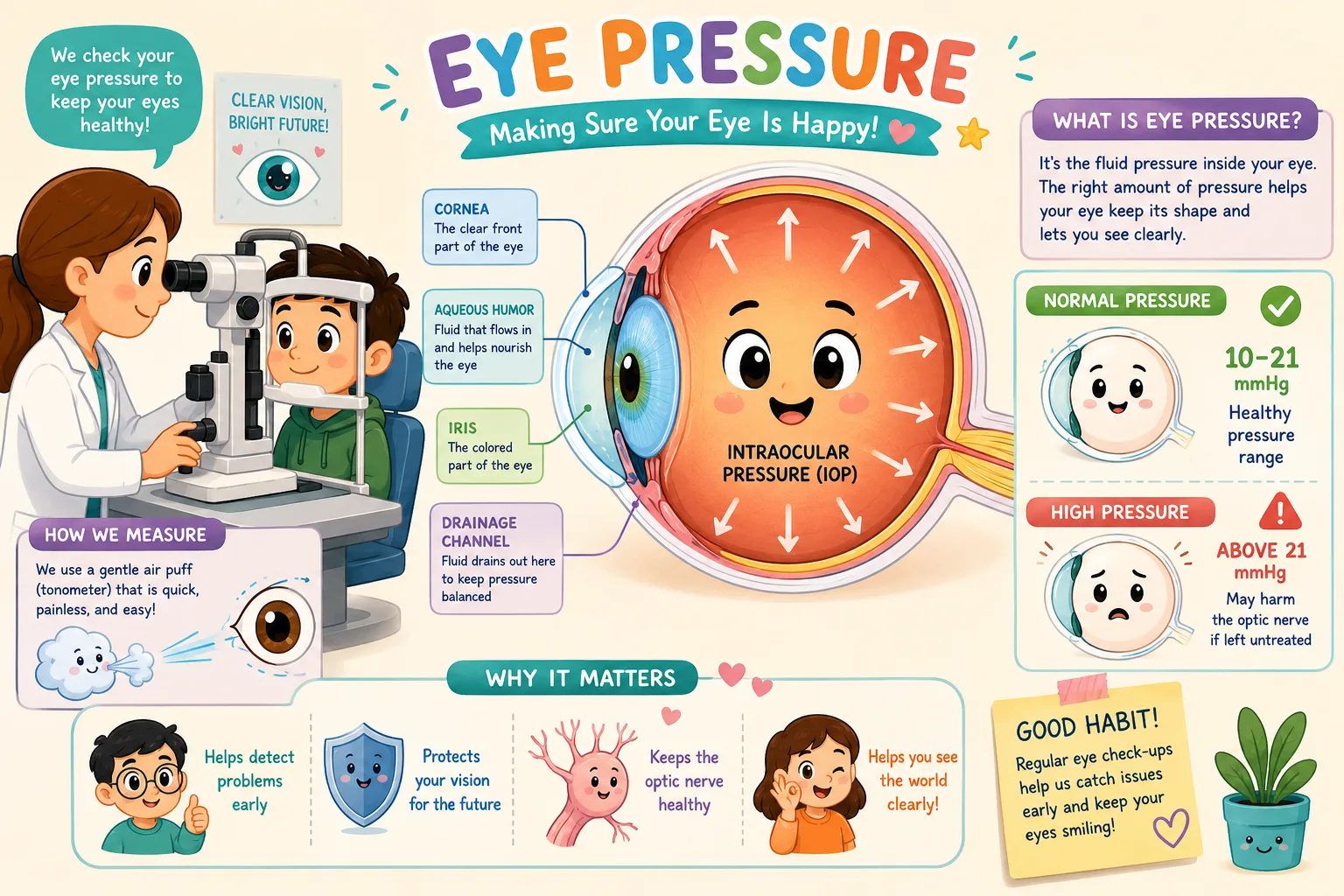
Another major definition of IOP is Intraocular Pressure, a medical term used in ophthalmology and eye care. This refers to the fluid pressure inside the eye. Doctors monitor this pressure carefully because abnormal levels may signal serious eye conditions, especially glaucoma.
Think of the eye like a water balloon. It needs the right amount of pressure to maintain shape and function correctly. Too much pressure can damage the optic nerve, while too little may create structural problems. That balance is why eye specialists routinely measure IOP during examinations.
People often encounter this meaning during eye exams, glaucoma screenings, LASIK evaluations, or discussions about vision health. Because the acronym is so common in ophthalmology, eye doctors rarely spell out the full phrase unless speaking with patients unfamiliar with medical terminology.
IOP as Intraocular Pressure
Intraocular Pressure specifically measures the pressure created by fluids inside the eye. Eye care professionals use specialized instruments to check these levels. Elevated pressure does not automatically mean someone has glaucoma, but it significantly increases the risk.
Doctors often refer to pressure readings numerically. For example, a physician may say, “Your IOP is within the normal range.” In this setting, the acronym clearly has nothing to do with therapy or rehabilitation. The surrounding conversation immediately reveals the medical context.
Why Eye Pressure Matters for Glaucoma
Glaucoma is one of the leading causes of vision loss worldwide, which is why eye pressure monitoring matters so much. High intraocular pressure can slowly damage the optic nerve over time, often without noticeable symptoms in the early stages.
That silent nature makes regular eye exams incredibly important. Many people only discover elevated IOP during routine checkups. Early detection gives doctors a chance to reduce pressure and protect vision before permanent damage occurs.
In medical conversations, this definition of IOP is extremely common. If the discussion includes terms like “optic nerve,” “glaucoma,” “eye drops,” or “vision testing,” the acronym almost certainly refers to intraocular pressure.
IOP in Texting, Social Media, and Online Conversations
Many people search for “What does IOP mean in texting?” because they assume it must have a popular slang definition. Interestingly, IOP is not nearly as widespread in internet slang as acronyms like LOL, IDK, or TBH. Studies and educational resources on texting abbreviations show many common online acronyms, but IOP appears far less frequently in casual social communication.
That said, social media users sometimes create temporary or niche meanings for acronyms within specific communities. Gamers, fandom groups, workplace chats, and private friend groups often invent their own shorthand. In those situations, IOP may carry a meaning understood only within that circle.
This is one reason acronym confusion keeps growing online. Internet culture evolves rapidly, and communities continuously repurpose abbreviations for jokes, trends, or insider language. A person seeing IOP in a Discord chat could encounter an entirely different meaning from someone reading it in a medical article.
Does IOP Have a Popular Slang Meaning?
Unlike internet classics such as FOMO, YOLO, or IMO, IOP does not currently dominate mainstream slang culture. Most searches for the acronym still connect to healthcare definitions.
However, some people casually use it as shorthand in niche online spaces. Because slang evolves constantly, meanings can shift quickly. One community may use IOP jokingly, while another treats it as professional terminology.
That fluidity is part of modern internet communication. Acronyms behave almost like inside jokes that spread unpredictably.
Examples of IOP in Casual Online Use
Here are examples showing how context changes interpretation:
- “I’m starting IOP next week after talking to my therapist.”
- “My eye doctor said my IOP is too high.”
- “The article discussed IOP in networking systems.”
- “Does anyone know what IOP means in this chat?”
Notice how the surrounding words instantly clarify the meaning. Without context, the acronym feels vague. With context, the intended definition becomes obvious.
Specialized Meanings of IOP in Technology, Business, and Academia
Outside healthcare, IOP appears in technology, finance, education, and research fields. These meanings are less common for the average person but still important in specialized environments.
For example, technology researchers sometimes use IOP to refer to concepts like the Internet of People, a networking idea focused on human-centered digital systems. Other computing environments may use IOP in reference to input/output processors or interoperability profiles.
In business and finance, IOP can represent terms like Integrated Options Portfolio. Academic institutions may use the acronym in organizational names or research programs. This variety explains why searching the acronym online can produce wildly different results.
IOP in Computing and Technology
Technology fields love acronyms because they simplify highly technical language. Engineers, programmers, and IT specialists frequently shorten complex terms into brief abbreviations. Within these environments, IOP may refer to networking systems, processors, interoperability standards, or research frameworks.
The important thing is recognizing the topic of discussion. If people are discussing servers, infrastructure, networking, or data systems, the acronym probably belongs to the tech world.
IOP in Finance and Business
Financial professionals also rely heavily on shorthand communication. In investment discussions, IOP may stand for terms related to portfolio management or strategic investment structures.
Business acronyms often sound confusing because they overlap with medical or technological terminology. That overlap highlights how modern industries independently create abbreviations without considering how many meanings already exist elsewhere.
IOP in Research and Academic Institutions
Several organizations and institutions use IOP as part of their official names. Examples include research institutes, publishing organizations, and academic centers.
In these cases, the acronym behaves more like a brand name than a descriptive term. Context again becomes the deciding factor.
How to Figure Out the Correct Meaning of IOP
Understanding IOP correctly is really about becoming a context detective. Instead of staring only at the acronym, look around it. The surrounding language usually reveals everything.
Human communication works like puzzle-solving. We rarely interpret words in isolation. Tone, setting, speaker background, and topic all help decode meaning. Acronyms simply make that process more obvious.
Looking at the Conversation Topic
The first clue is always the subject being discussed. If the conversation involves hospitals, therapy, counseling, addiction recovery, or mental health, IOP almost certainly means Intensive Outpatient Program.
If the topic involves vision, eye exams, glaucoma, or ophthalmology, then Intraocular Pressure is the likely interpretation.
Context acts like GPS navigation for language. Without it, people get lost.
Identifying Industry-Specific Clues
Profession-specific vocabulary also helps. Healthcare workers, engineers, investors, and researchers all speak slightly different language dialects. Recognizing those patterns helps identify the correct acronym meaning quickly.
For example:
| Context | Likely Meaning of IOP |
|---|---|
| Therapy or rehab | Intensive Outpatient Program |
| Eye clinic | Intraocular Pressure |
| Networking technology | Internet of People or computing term |
| Finance discussion | Investment-related meaning |
Watching for Tone and Platform Differences
Social media language differs dramatically from medical documentation or professional reports. If you see IOP on TikTok, Reddit, or a casual group chat, there is a higher chance the acronym carries slang or niche meaning.
If it appears in a clinical report or doctor’s office, the interpretation becomes much more predictable.
Acronyms Similar to IOP That People Often Confuse
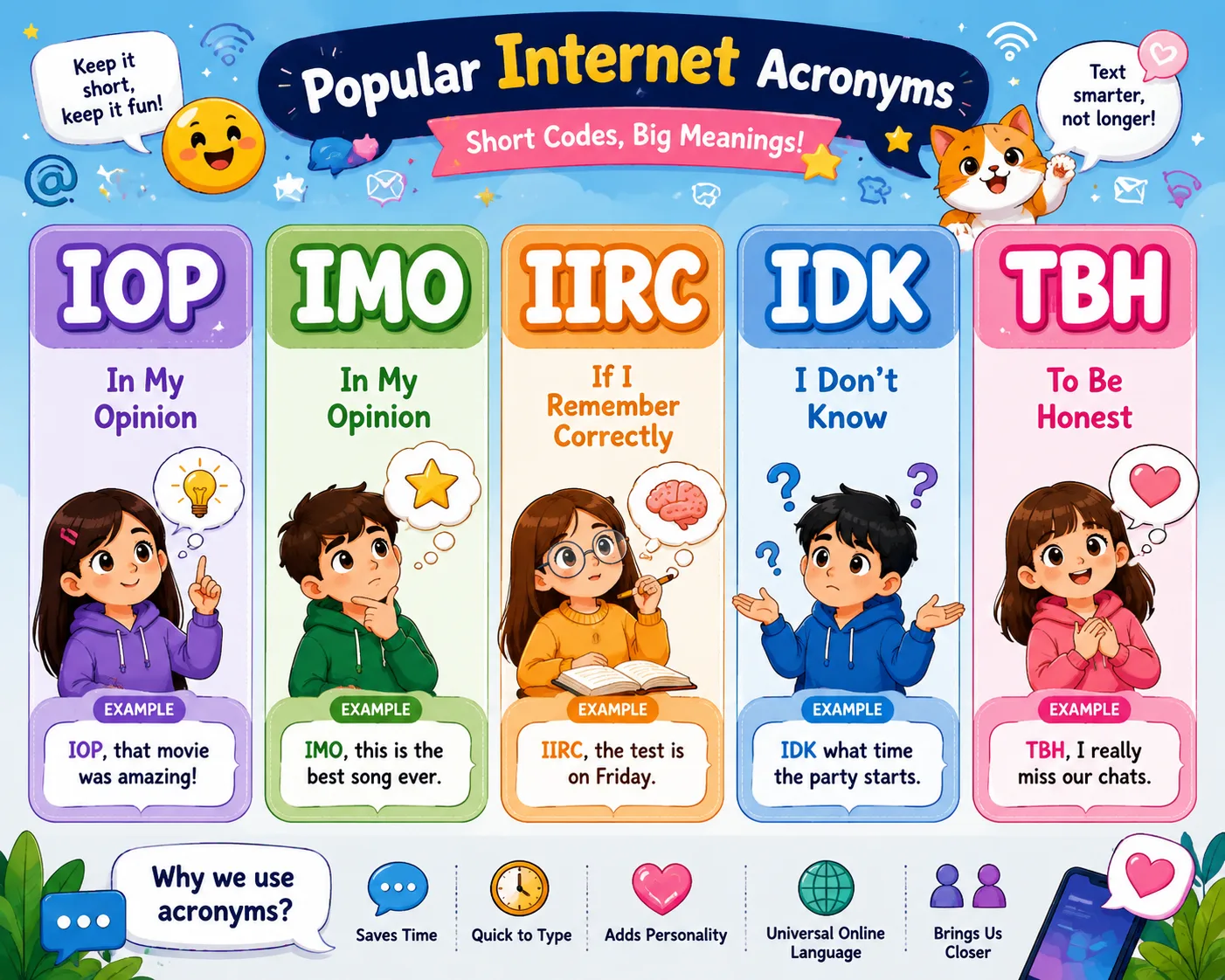
Acronyms often blur together visually. Many people accidentally confuse IOP with terms like IMO, IIRC, IDK, or other internet abbreviations. That confusion happens because the human brain recognizes patterns faster than exact letters.
Online communication intensifies this issue because people skim messages rapidly instead of reading carefully.
Difference Between IOP, IMO, and IIRC
Here are a few commonly confused acronyms:
| Acronym | Meaning |
|---|---|
| IOP | Intensive Outpatient Program / Intraocular Pressure |
| IMO | In My Opinion |
| IIRC | If I Recall Correctly |
| IDK | I Don’t Know |
| TBH | To Be Honest |
Resources documenting internet slang show that abbreviations continue evolving as digital communication expands.
Medical Acronyms That Look Similar
Medical language contains thousands of abbreviations. Some resemble each other closely enough to create mistakes. That is why healthcare professionals rely heavily on context and documentation standards.
For patients unfamiliar with medical terminology, acronyms can feel overwhelming. Asking for clarification is always the smartest move when uncertainty exists.
Why Understanding Acronyms Matters in Modern Communication
Acronyms are no longer just internet shortcuts. They shape communication across medicine, education, business, entertainment, and technology. Understanding them correctly helps people avoid misunderstandings, especially in professional or healthcare settings.
The modern world moves quickly, and language adapts to keep pace. Acronyms compress information into tiny packages that travel rapidly across screens and conversations. That efficiency is useful, but it also creates ambiguity.
How Misunderstandings Happen Online
Misunderstandings usually occur when people assume there is only one meaning for an acronym. Someone reading “IOP” without context may jump to the wrong conclusion instantly.
That is similar to hearing the word “bat” without knowing whether someone means a baseball bat or an animal. Context supplies the missing information.
The Future of Acronyms in Digital Culture
Acronyms will probably continue expanding as communication becomes even more digital and mobile-focused. Artificial intelligence, online gaming, virtual workplaces, and global social media communities constantly create new shorthand expressions.
That means people will keep encountering unfamiliar abbreviations. The ability to interpret context correctly will become even more valuable over time.
Conclusion
The acronym IOP may look simple, but its meaning changes dramatically depending on where you encounter it. In mental health and addiction recovery, it most commonly stands for Intensive Outpatient Program, a structured form of therapy that allows people to receive treatment while continuing everyday life. In ophthalmology, it refers to Intraocular Pressure, a critical measurement used to monitor eye health and glaucoma risk. Technology, business, and academic fields introduce even more specialized definitions.
The real secret to interpreting IOP correctly is context. The surrounding words, conversation topic, speaker background, and platform all provide clues. Once you start paying attention to those details, the intended meaning usually becomes clear almost immediately.
Modern communication is packed with acronyms, abbreviations, and shorthand expressions. Instead of seeing that as confusing, think of it like learning the dialects of different digital communities. Every acronym tells a small story about the environment where it is being used.
FAQs
What does IOP usually mean in healthcare?
In healthcare, IOP most commonly stands for Intensive Outpatient Program, which is a structured treatment program used for mental health and addiction recovery.
What does IOP mean during an eye exam?
In ophthalmology, IOP means Intraocular Pressure, which measures fluid pressure inside the eye and helps doctors detect glaucoma risks.
Is IOP a common texting slang term?
No, IOP is not considered a major mainstream texting acronym like LOL or TBH. It appears more often in medical or professional contexts.
How can I tell which meaning of IOP is correct?
Look at the surrounding conversation. Words related to therapy suggest Intensive Outpatient Program, while eye-related terms suggest Intraocular Pressure.
Are there other meanings of IOP besides medical ones?
Yes. IOP can also appear in technology, finance, research, and academic settings with different specialized meanings.

American content writer and blogger based in Boise, Idaho, age 29. Dorian specializes in creating well-researched digital content focused on lifestyle, technology, and online resources. With several years of professional writing experience, he is known for translating complex topics into practical, reader-friendly articles. He regularly contributes editorial content for nicknamez.xyz while emphasizing accuracy, transparency, and trustworthy research.