
Instagram is full of tiny visual clues that spark huge curiosity. One day, you open someone’s profile and suddenly notice their “Following” button is green instead of the usual gray or black. Instantly, questions start flooding your mind. Did Instagram roll out a new feature? Does it mean they like you more? Are you secretly part of some private group? Or is it just another confusing app glitch?
The truth is simpler than most people think, but the mystery surrounding the green following label on Instagram has exploded across forums, Reddit threads, TikTok discussions, and social media blogs during the past year. Many users are trying to decode what the feature actually means and whether it reveals anything personal about their relationship with someone. The reason people are obsessed with it is easy to understand. Instagram has shifted heavily toward private sharing, selective audiences, and smaller digital circles rather than massive public posting. That little green indicator taps directly into human curiosity because it feels exclusive, almost like being handed a backstage pass.
Recent discussions and updated Instagram interface observations strongly connect the green following label with the platform’s Close Friends feature, especially as Instagram expands private sharing across Stories, Notes, Reels, and highlights. Users commonly notice the label while visiting profiles or interacting with Close Friends content. While Instagram itself has never loudly announced every detail behind the indicator, the pattern is consistent enough that most current platform analysis points toward the same explanation.
Before you start overanalyzing who added or removed you from their inner circle, it helps to understand exactly how this feature works, why it appears, why it sometimes disappears, and what most people misunderstand about it.
Why Instagram Users Suddenly Started Noticing the Green Following Label
For years, Instagram was mainly about public sharing. People posted selfies, travel photos, food pictures, and carefully edited stories for everyone to see. Over time, though, the platform evolved into something far more layered and private. Instead of sharing everything publicly, users started creating smaller circles where they could post more personal, casual, or unfiltered content. That shift is exactly why the green following label suddenly became such a hot topic.
One major reason people are noticing the feature now is because Instagram has quietly redesigned how Close Friends indicators appear throughout the app. Visual markers connected to Close Friends have become easier to notice against Instagram’s cleaner and more minimalist interface. Users report seeing green story rings, green labels on Notes, and green following indicators more often during normal browsing. Even though the feature itself is not completely new, Instagram’s broader push toward selective sharing made those indicators far more visible and socially significant.
There is also a strong psychological reason behind the fascination. Humans naturally react to exclusivity. When something appears hidden, restricted, or reserved for a smaller group, curiosity skyrockets. The green following label creates exactly that effect. It feels personal, almost secretive. People instantly begin asking themselves questions like, “Why me?” or “Why not me?” That emotional reaction fuels endless online discussions and speculation.
Social media culture has also become deeply analytical. Users constantly try to decode hidden meanings behind likes, follows, story views, and interaction patterns. A tiny color change on Instagram can trigger hours of overthinking. Reddit discussions are full of users asking whether the label means romantic interest, friendship status, or emotional closeness. In reality, the answer is usually much less dramatic than people assume.
At the same time, creators and influencers are using Close Friends strategically. Instead of limiting it only to actual best friends, many creators now use Close Friends lists for VIP followers, exclusive promotions, behind-the-scenes updates, and subscriber-style content. That evolution blurred the line between personal intimacy and content strategy. Because of that, being included in someone’s Close Friends list no longer always means emotional closeness. Sometimes it simply means you are part of a targeted audience.
What the Green Following Label Actually Means
So let’s answer the big question directly: What does green following mean on Instagram?
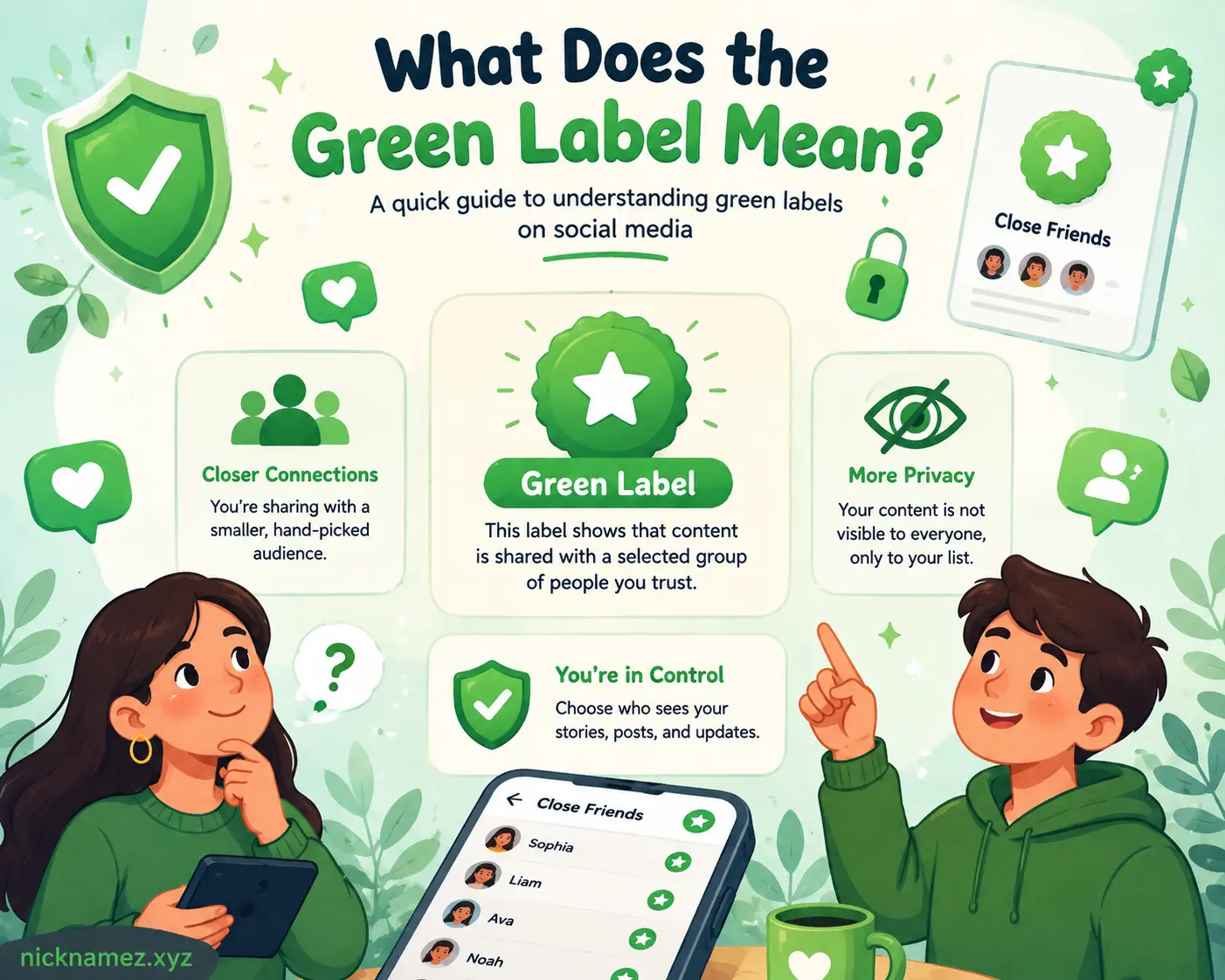
Based on current platform behavior and consistent user reports, the green following label usually means that you have been added to someone’s Close Friends list. Instagram uses green visual signals throughout the app to identify Close Friends content and relationships. The same green color appears around private story rings and certain exclusive content indicators.
Think of Close Friends as Instagram’s private VIP room. Instead of sharing content with every follower, users can selectively choose specific people who are allowed to see more personal updates. When you are included in that smaller audience, Instagram may display the green following indicator when you visit that person’s profile.
What makes the feature interesting is its subtlety. Instagram does not send a notification saying, “Congratulations, you made the Close Friends list.” Instead, the platform quietly signals it visually. That creates the feeling of discovering something hidden rather than being formally invited into a group. It is almost like noticing a secret handshake instead of receiving an official membership card.
Still, it is important not to exaggerate what the label means. The green following indicator does not automatically confirm deep friendship, romance, trust, or emotional attachment. Many users add dozens or even hundreds of people to Close Friends for practical reasons. Businesses use it for marketing. Creators use it for engagement. Some users simply prefer sharing casually with a smaller audience instead of broadcasting publicly.
Another key point is privacy. The indicator is generally visible only to the person who is included in the Close Friends list. Other followers will not necessarily see the same green label on that profile. That selective visibility is what keeps the feature feeling personal and discreet.
Interestingly, Instagram never fully explains every micro-feature publicly. That ambiguity creates space for speculation. Some people interpret the label emotionally while others treat it as purely functional. The reality sits somewhere in the middle. It often suggests a higher level of selective sharing, but the reason behind that inclusion depends entirely on the account owner.
Where Users Typically Notice This Feature
Most people first discover the green following label completely by accident. They are scrolling through Instagram casually, tap into someone’s profile, and suddenly notice the Following button appears green instead of normal. That moment creates immediate confusion because Instagram rarely explains interface changes directly to users.
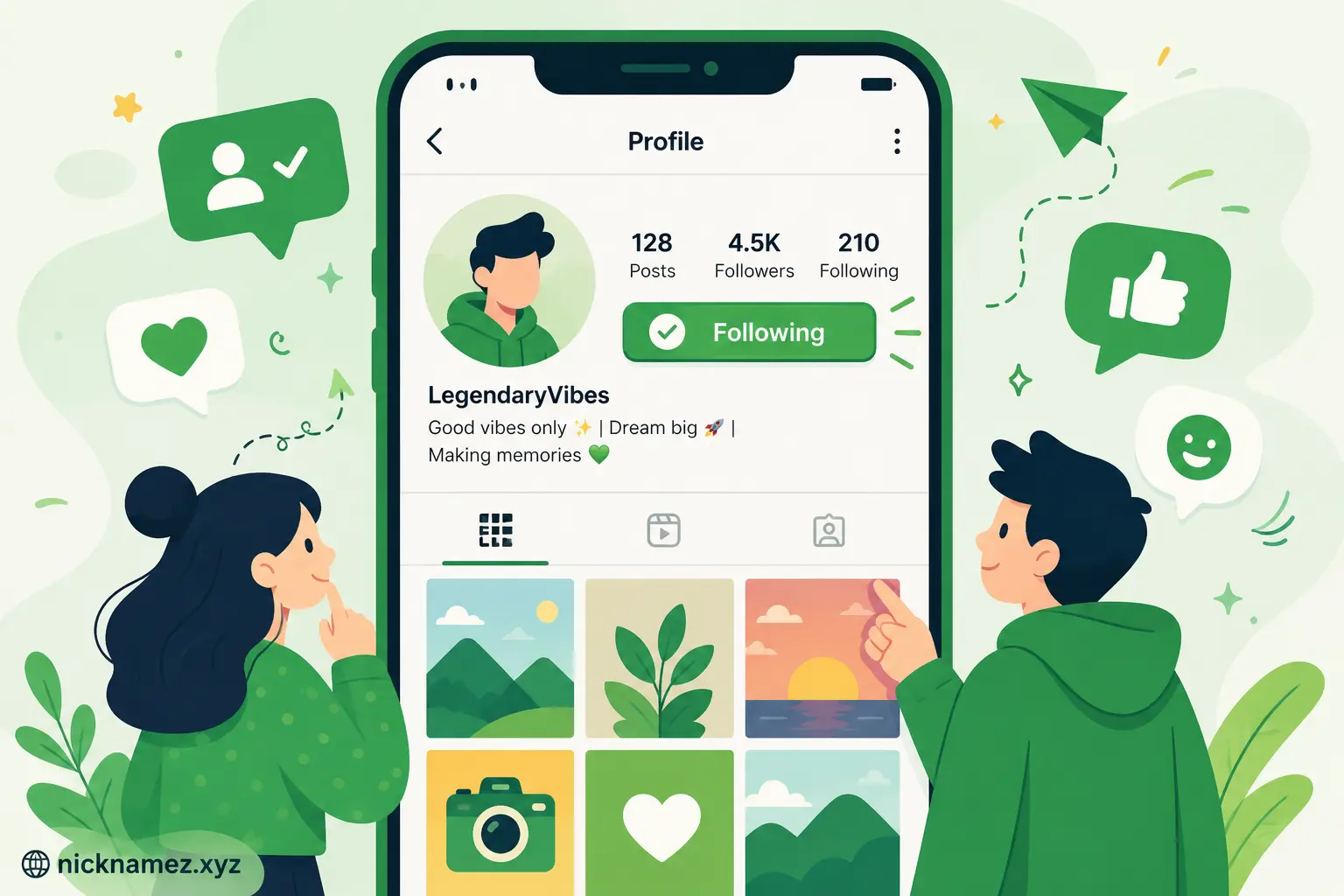
The most common place people notice the feature is directly on someone’s profile page. Instead of the ordinary Following button style, the button appears highlighted in green. This tends to happen when viewing profiles connected to Close Friends sharing behavior. According to multiple recent discussions and feature analyses, this is the primary visual signal tied to Close Friends access.
Another major place users notice green indicators is through Stories. Instagram has used green rings around Close Friends Stories for years. When someone posts a Close Friends Story, viewers included in that audience see a bright green ring around the profile image instead of Instagram’s standard pink-orange gradient. That ring has become one of Instagram’s clearest visual cues for private sharing.
Highlights and Notes now also play a role. Some users report seeing green Close Friends markers on Notes or Story Highlights connected to private content. This expansion of green indicators across the app is part of why confusion increased recently. Users are seeing green in more places than before, which naturally sparks questions about what each version means.
What makes the feature especially interesting is how inconsistent Instagram’s rollout can appear. Some users report seeing green indicators in places others do not. Different devices, app versions, testing groups, and regional updates may affect visibility. That inconsistency leads many users to think the feature is a glitch rather than intentional design.
There is also an emotional layer to where the feature appears. Seeing a green story ring feels temporary because stories disappear after 24 hours. Seeing a green following label directly on a profile feels more permanent and relationship-oriented. That difference changes how users emotionally interpret the signal, even if both indicators technically connect back to the same Close Friends system.
How Close Friends Lists Connect to the Green Following Label
To fully understand the green following label, you first need to understand how Instagram’s Close Friends feature works behind the scenes.
Instagram introduced Close Friends as a way for users to create a private audience separate from their full follower list. Instead of posting everything publicly, users can share specific Stories or content with a carefully selected group. The feature became popular because it gives people more control over who sees their personal moments, random thoughts, jokes, or behind-the-scenes updates.
The system works surprisingly simply. Users manually add people to a private list through Instagram settings. Once added, those selected people gain access to Close Friends content. No formal invitation is sent, and users can be removed at any time without notification. That silent flexibility is one reason Instagram users like the feature. It avoids awkward social conversations while still allowing selective sharing.
Instagram uses the color green consistently to identify Close Friends interactions. The platform essentially created a visual language around private sharing. Green means “restricted audience” or “exclusive visibility.” That is why you see green story rings, green stars, green Notes markers, and green following indicators connected to Close Friends activity.
Green Story Rings
The green story ring is the oldest and most widely recognized Close Friends signal. When someone shares a Close Friends Story, only selected users can see the green border. Everyone else sees nothing unusual because the Story remains invisible to them entirely. That selective visibility reinforces the feeling of being included in something private.
Green Following Buttons
The green following button appears to function as an extension of that same private-sharing ecosystem. Instead of marking temporary content, it visually signals that a private sharing connection exists between you and that account. Current reporting strongly ties the label to Close Friends membership or interaction.
What makes this fascinating is how Instagram transformed a simple color into a social signal loaded with emotional meaning. Green now represents access, exclusivity, privacy, and selective trust within Instagram culture. That is a huge amount of meaning attached to a tiny interface detail.
Does the Green Following Label Reveal Anything About Your Relationship?
This is where things get messy because people love turning social media features into emotional detective work.
Technically, the green following label may suggest that someone chose to include you in a more selective audience. That alone implies some level of preference because Close Friends lists are manually curated. Users actively decide who belongs there. So yes, there is usually some degree of intentionality behind it.
But does it automatically mean they consider you emotionally close? Not necessarily.
One of the biggest misconceptions surrounding the green following feature is the belief that it confirms friendship, attraction, or personal affection. In reality, people use Close Friends lists in wildly different ways. Some keep their list extremely tiny and personal. Others add hundreds of followers for engagement or promotional reasons. Influencers often use Close Friends strategically rather than emotionally.
For example, a creator may add highly engaged followers to encourage loyalty and interaction. A business might use Close Friends to distribute early product announcements. Someone else might use it only for actual family and best friends. The meaning depends entirely on the person controlling the list.
This is why overanalyzing Instagram indicators can become dangerous emotionally. Social media encourages people to search for hidden validation in every small interaction. Suddenly, a green button becomes a symbol of emotional status. Reddit discussions show how quickly users spiral into interpreting the feature personally.
The healthier approach is treating the feature as what it actually is: a selective sharing tool. Being included probably means the person is comfortable sharing more private content with you. Beyond that, assumptions become risky.
It is also important to remember that relationships change constantly online. Someone may add or remove users from Close Friends lists casually without attaching major emotional significance to the decision. Sometimes people reorganize their lists for privacy, content themes, or audience cleanup rather than interpersonal reasons.
Privacy Questions People Often Have About the Feature
Privacy is one of the main reasons Instagram users obsess over the green following label. The feature feels subtle enough to create uncertainty. People naturally wonder who can see it, whether removals are noticeable, and how much information Instagram is secretly revealing.
One of the most common questions is whether everyone can see the green following label on someone’s account. Current platform observations strongly suggest the label is visible only to the user who is included in the Close Friends-related interaction. That privacy limitation is important because it prevents public exposure of someone’s private sharing choices.
Another huge concern involves removal anxiety. Users constantly ask whether someone can tell if they were removed from Close Friends. Technically, Instagram does not send a notification for removal. However, users may notice indirect signs. The green following label might disappear, green story rings may stop appearing, or Close Friends highlights could become inaccessible.
Still, even those signs are not always reliable because Instagram glitches happen frequently. Some Reddit users report green indicators appearing incorrectly or disappearing temporarily due to app bugs and interface inconsistencies. That uncertainty makes it difficult to draw definite conclusions from disappearing labels alone.
There are also privacy concerns surrounding screenshots and reposting. Many users treat Close Friends content as semi-private, assuming viewers understand the unspoken etiquette involved. Sharing screenshots from Close Friends Stories without permission is often considered a breach of trust socially, even if Instagram technically allows it.
Another interesting privacy angle involves algorithmic assumptions. Some analysts speculate that Instagram may use Close Friends interactions to better understand relationship strength and engagement preferences. While Meta has not publicly detailed all algorithmic implications, selective sharing naturally gives platforms more behavioral data about trusted social circles.
Ultimately, Instagram designed Close Friends to create a balance between public posting and full privacy. The green following label exists inside that middle space; private enough to feel exclusive but visible enough to spark curiosity.
Situations Where the Green Following Label May Change or Disappear
One reason users become obsessed with the green following label is because it does not always stay consistent. Sometimes it appears suddenly. Other times it disappears without warning. That unpredictability makes people panic, speculate, and overthink.
The most obvious reason the label disappears is simple: you were removed from someone’s Close Friends list. Since users can freely edit their list anytime, the indicator may vanish immediately after removal. Instagram does not notify users about this change directly, but the disappearance of green indicators can act as an indirect clue.
Still, removal is not always the answer. Instagram’s interface changes constantly, and glitches are incredibly common. Some users report temporary issues where green story rings appear but stories fail to load properly. Others notice indicators appearing inconsistently across different accounts or devices. Because of this, disappearing indicators should never be treated as guaranteed proof of removal.
App updates also play a role. Instagram frequently tests interface variations with different groups of users before rolling features out globally. One person may see the green following label while another using a different device version may not. These testing phases create widespread confusion because users assume inconsistent behavior reflects personal relationship changes instead of software experimentation.
Content visibility settings can complicate things further. Someone may still keep you on Close Friends while hiding certain Stories individually. Alternatively, archived or expired content might affect whether certain green indicators appear in Highlights or Notes. That complexity makes Instagram’s private-sharing ecosystem harder to interpret than users realize.
There is also the human factor. People reorganize their Close Friends lists for completely non-emotional reasons all the time. They may clean inactive followers, change content strategy, narrow audience size, or experiment with engagement. A disappearing label does not automatically mean conflict, rejection, or drama.
Ironically, the uncertainty itself is what keeps the feature psychologically powerful. Because Instagram avoids giving explicit explanations, users fill the gaps with assumptions and emotional narratives.
What Most Users Misunderstand About the Green Following Feature
The biggest misunderstanding about the green following feature is the assumption that it always carries deep personal meaning.
Social media trains people to interpret digital signals emotionally. A delayed reply feels intentional. A viewed Story feels significant. A green following button suddenly becomes evidence of emotional hierarchy. But Instagram features are rarely that straightforward.
One common myth is that the green label means someone likes you romantically. There is absolutely no evidence supporting that assumption. Being on someone’s Close Friends list only confirms they chose to share selective content with you. The reason behind that choice varies enormously from person to person.
Another misconception is that the feature reflects interaction level or algorithmic favoritism automatically. While engagement may influence who gets added to Close Friends informally, Instagram does not publicly state that the green label appears because of high interaction alone. It remains a manually controlled feature tied primarily to private audience selection.
Many users also confuse the green following label with Instagram’s green active-status dot. These are completely different features. The active-status dot simply shows whether someone is online recently, while the green following indicator relates to Close Friends sharing behavior.
There is also confusion around reciprocity. Some users assume that if they see the green label, both people must have added each other to Close Friends. That is not necessarily true. Close Friends lists are independent. One person can add another without receiving the same inclusion back.
Perhaps the most important misunderstanding is believing Instagram indicators provide reliable emotional insight. They do not. Social media platforms reduce complex human relationships into tiny symbols, colors, and metrics. Users often project far more meaning onto those signals than they were ever designed to carry.
At its core, the green following feature is simply part of Instagram’s evolving private-sharing system. It reflects selective visibility, not emotional certainty.
Conclusion
The mystery around the green following label on Instagram comes from one simple truth: people are naturally curious about exclusivity. Whenever Instagram introduces subtle private-sharing signals, users immediately start decoding them like secret social clues. The green following indicator taps directly into that instinct.
Current platform behavior strongly connects the label to Instagram’s Close Friends feature, meaning it usually indicates you are included in someone’s more selective sharing circle. You may notice it on profiles alongside other green indicators like Story rings, Notes markers, or Close Friends highlights.
What the feature does not do is provide guaranteed emotional insight. It does not automatically mean romance, best friendship, loyalty, or favoritism. Sometimes it reflects genuine closeness. Other times it is simply part of a creator strategy, audience filter, or casual privacy preference.
The smartest way to view the green following label is as a visibility setting rather than a relationship diagnosis. Instagram’s design encourages curiosity, but overanalyzing every digital signal usually creates more confusion than clarity.
At the end of the day, the little green button is less about hidden secrets and more about how social media continues evolving toward smaller, more private online spaces.
FAQs
Does green following on Instagram mean I am on someone’s Close Friends list?
In most current cases, yes. The green following label is strongly associated with Instagram’s Close Friends feature and selective sharing indicators.
Can other people see the green following label too?
Typically, no. The indicator is generally visible only to the person connected to the Close Friends interaction or private sharing relationship.
Why did the green following label disappear?
The label may disappear if you were removed from someone’s Close Friends list, but app glitches, updates, or temporary interface issues can also cause changes.
Is the green following button different from the green online dot?
Yes. The green online dot indicates recent activity or active status, while the green following label is connected to Close Friends and selective sharing features.
Does the green following label mean someone likes me personally?
Not necessarily. Some users reserve Close Friends for personal relationships, while others use it for creators, engagement groups, or content strategies. The meaning depends entirely on the individual user.

American content writer and blogger based in Boise, Idaho, age 29. Dorian specializes in creating well-researched digital content focused on lifestyle, technology, and online resources. With several years of professional writing experience, he is known for translating complex topics into practical, reader-friendly articles. He regularly contributes editorial content for nicknamez.xyz while emphasizing accuracy, transparency, and trustworthy research.