

The Spanish word “loca” is one of those expressions that has traveled far beyond its original language. You hear it in songs, movies, memes, casual conversations, and social media captions. Some people use it affectionately. Others use it jokingly. In certain situations, though, it can sound insulting or even offensive. That complexity is exactly what makes the word so fascinating.
At its most basic level, “loca” is the feminine form of the Spanish adjective “loco,” which traditionally means “crazy” or “mad.” But language is never just about dictionary definitions. Words evolve as cultures evolve. A term that once described someone with mental instability can slowly become slang for “wild,” “fun,” “intense,” “passionate,” or even “best friend.”
Think about how English speakers casually say things like “That’s insane,” “You’re crazy,” or “This party is wild.” The word “loca” works in a similar way in many Spanish-speaking communities. Tone, setting, facial expression, and relationship all change the meaning dramatically. A grandmother calling her granddaughter “mi loca” can sound loving and playful. A stranger shouting “loca” during an argument can sound aggressive and disrespectful.
The popularity of the term exploded internationally thanks to music and pop culture. Songs like Livin’ la Vida Loca by Ricky Martin helped introduce millions of non-Spanish speakers to the word. Since then, “loca” has appeared everywhere from Hollywood dialogue to internet slang, often detached from its deeper cultural meaning.
This article explores exactly what “loca” means, where it comes from, how people use it in everyday speech, and why context matters so much when interpreting it.
The Literal Definition of “Loca”
The Feminine Form of “Loco”
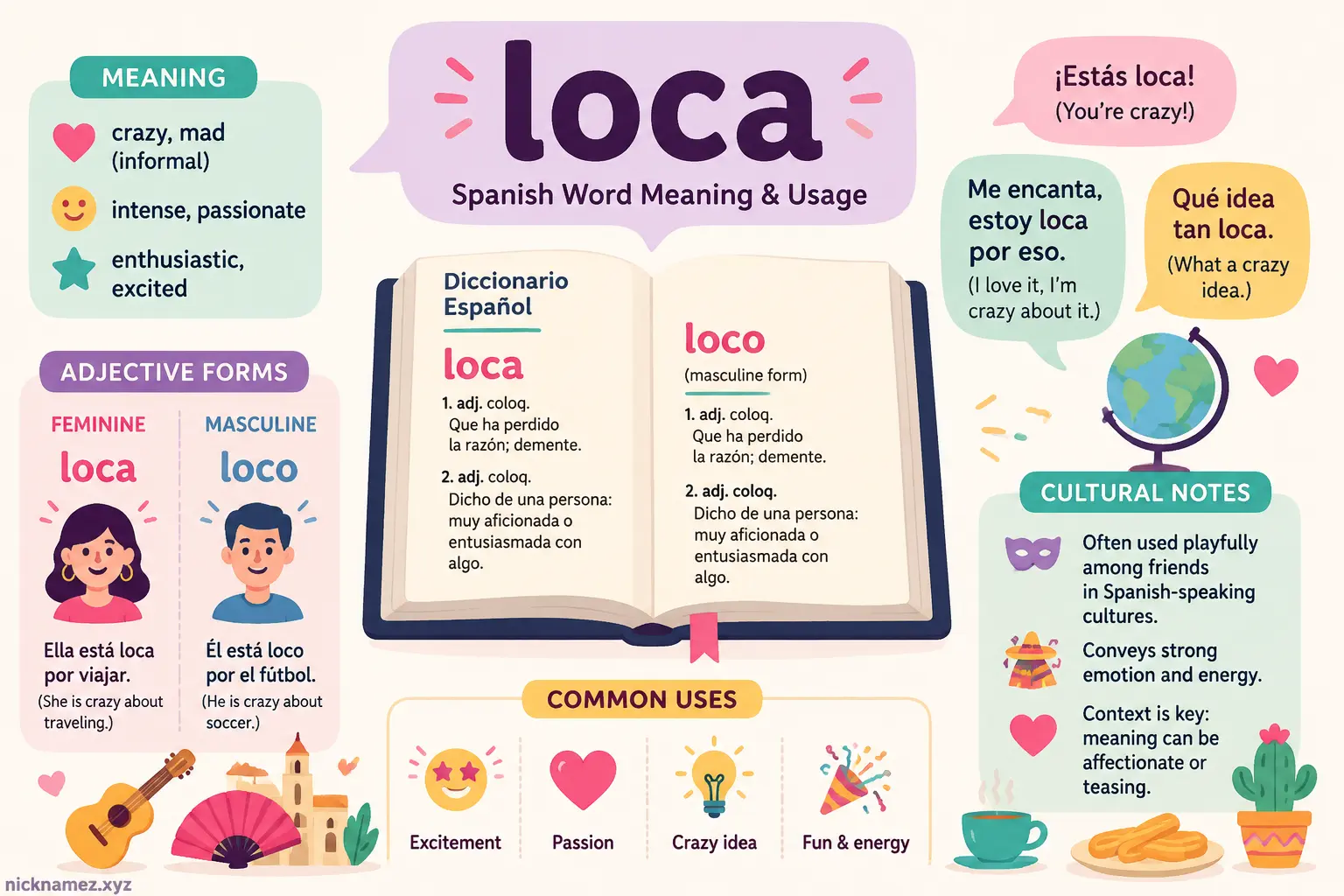
In Spanish grammar, adjectives often change depending on gender. “Loco” is masculine, while “loca” is feminine. So if you are describing a woman or girl as “crazy,” the grammatically correct term is “loca.” This gender agreement is one of the most recognizable characteristics of the Spanish language. It may seem unusual to English speakers at first, but it is completely natural within Spanish-speaking cultures.
For example:
- “Él está loco” means “He is crazy.”
- “Ella está loca” means “She is crazy.”
That sounds simple enough, but the interesting part begins when people stop using the word literally. In modern speech, “loca” often functions more like an emotional color than a medical description. A friend might laugh and say, “Estás loca,” after hearing an outrageous story. In that moment, nobody truly means the person has lost their sanity. Instead, it means something closer to “You’re wild,” “You’re unbelievable,” or “You’re hilarious.”
Spanish speakers also use the word dramatically for emphasis. Someone who absolutely loves a celebrity might say, “Estoy loca por él,” which translates more naturally to “I’m crazy about him.” The word becomes emotional rather than clinical. It expresses intensity, passion, excitement, or obsession.
That flexibility is part of why the term became so popular internationally. It is short, expressive, emotional, and adaptable. Like a Swiss Army knife of slang, it can fit into dozens of conversational situations depending on how it is delivered.
Traditional Dictionary Meanings
Traditional dictionaries still define “loca” primarily as someone who is mentally unstable or irrational. Historically, the word referred to madness in a serious sense. Older generations sometimes still use it that way, especially in formal or critical contexts.
Here is a quick breakdown of common meanings:
| Usage | Meaning | Tone |
|---|---|---|
| Literal | Mentally unstable | Serious |
| Informal | Wild or impulsive | Casual |
| Affectionate | Fun or eccentric | Friendly |
| Romantic | Passionate or obsessed | Emotional |
| Insulting | Irrational or annoying | Negative |
This range explains why misunderstanding can happen easily. A non-native speaker may hear “loca” in a playful context and assume it is always harmless. But words carry emotional baggage, and not every listener interprets them the same way.
Modern conversations around mental health have also changed how people think about words like “crazy,” “mad,” and “loca.” Some speakers avoid them entirely because they can stigmatize mental illness. Others continue using them casually because the emotional meaning has drifted far away from the literal definition.
Language constantly evolves like a river changing course. “Loca” today is not frozen in one meaning. It flows between humor, affection, exaggeration, flirtation, and criticism depending on who says it and why.
The Origins and Etymology of the Word
Latin and Historical Influences
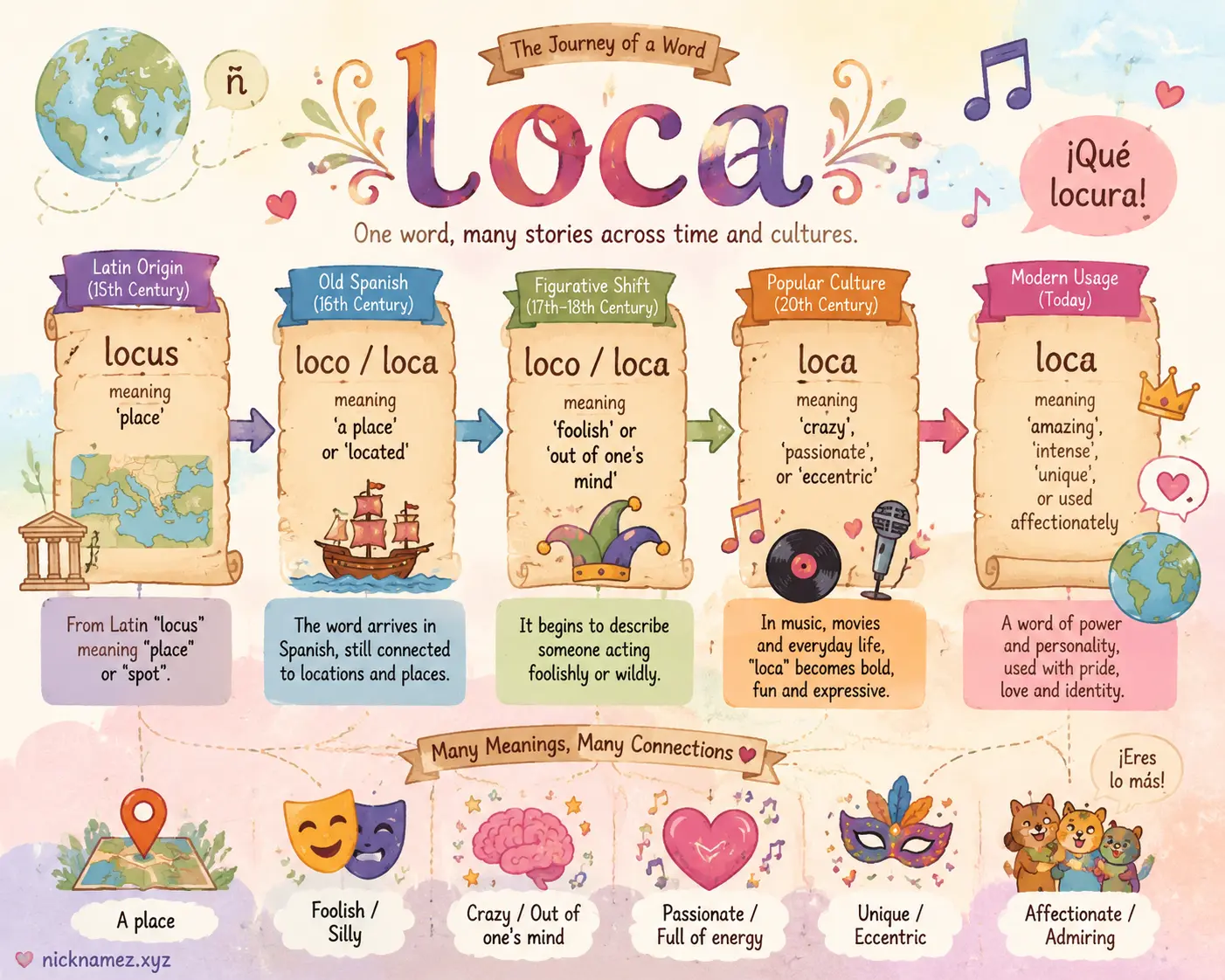
The exact etymology of “loco” and “loca” is debated among language historians, which makes the word even more intriguing. Some linguistic discussions connect the development of the term to Latin roots associated with displacement or irrationality, though scholars do not universally agree on a single origin.
What we do know is that the word has existed in Spanish for centuries. Early uses leaned heavily toward descriptions of madness, foolishness, or reckless behavior. During medieval times, mental illness was poorly understood, and words like “loco” often carried strong social stigma. Calling someone “loca” was not playful back then. It could seriously damage a person’s reputation.
As Spanish spread throughout Latin America during colonization, the word evolved differently across regions. Some communities softened the meaning. Others transformed it into slang. Over generations, it gained emotional flexibility. This is common in language evolution. Harsh words often become casual expressions over time, especially among younger speakers.
English has gone through similar transformations. Words like “crazy,” “nuts,” and “insane” are now casually used in conversations that have nothing to do with mental health. Spanish followed a comparable path with “loca.”
Cultural blending also influenced the term’s survival. Spanish-speaking communities mixed Indigenous, African, European, and Caribbean linguistic traditions together, creating rich layers of slang and emotional nuance. That is why the same word can sound affectionate in one country and offensive in another.
How the Meaning Shifted Over Time
One of the most fascinating things about language is how emotional context changes meaning more than grammar does. “Loca” gradually shifted from a label of instability into an expression of personality and energy.
Imagine the word as a chameleon. In one moment it signals recklessness. In another, it signals admiration. A person dancing fearlessly at a party might be called “loca” as a compliment. Someone making impulsive decisions might hear it as criticism. The word bends according to the emotional atmosphere surrounding it.
By the late 20th century, music and entertainment accelerated this transformation dramatically. Latin pop artists began using “loca” to symbolize passion, freedom, sensuality, and excitement rather than literal insanity. Pop culture polished the edges off the word and made it commercially attractive.
Younger generations especially embraced the playful side of the term. Friends began using it almost like a nickname. In some circles, “loca” simply means someone energetic, dramatic, funny, or emotionally expressive.
That shift reflects broader social changes too. Modern communication values exaggeration. Social media rewards intensity and emotional language. Saying “That’s a little unusual” does not grab attention the same way “That’s loca!” does. The word carries energy, and energy spreads quickly online.
Why “Loca” Became Popular Worldwide
Music and Pop Culture Influence
Few things spread slang faster than music. The global success of Livin’ la Vida Loca turned “loca” into an internationally recognized word almost overnight. Even people who spoke no Spanish suddenly knew the expression.
The song title roughly translates to “Living the Crazy Life,” but the emotional meaning goes deeper than that. It suggested excitement, unpredictability, sensuality, and adventure. Suddenly, “loca” was not just a Spanish adjective anymore. It became a vibe.
After that cultural explosion, countless artists incorporated the word into songs, album titles, and lyrics. Shakira even released a song literally titled Loca, pushing the term further into mainstream pop culture.
Movies and television also helped popularize it. Characters began tossing around “loca” as flirtation, humor, or playful teasing. One famous example comes from The Twilight Saga: New Moon, where the character Jacob calls Bella “loca.” Fans later discussed how the word sounded affectionate rather than insulting in that context.
Pop culture simplified the term for global audiences. Instead of focusing on literal insanity, media presented “loca” as energetic, passionate, rebellious, and attractive. That emotional rebranding helped the word cross language barriers effortlessly.
Social Media and Internet Slang
Social media accelerated the transformation even further. On platforms like , , and , people use “loca” in captions, memes, and jokes constantly.
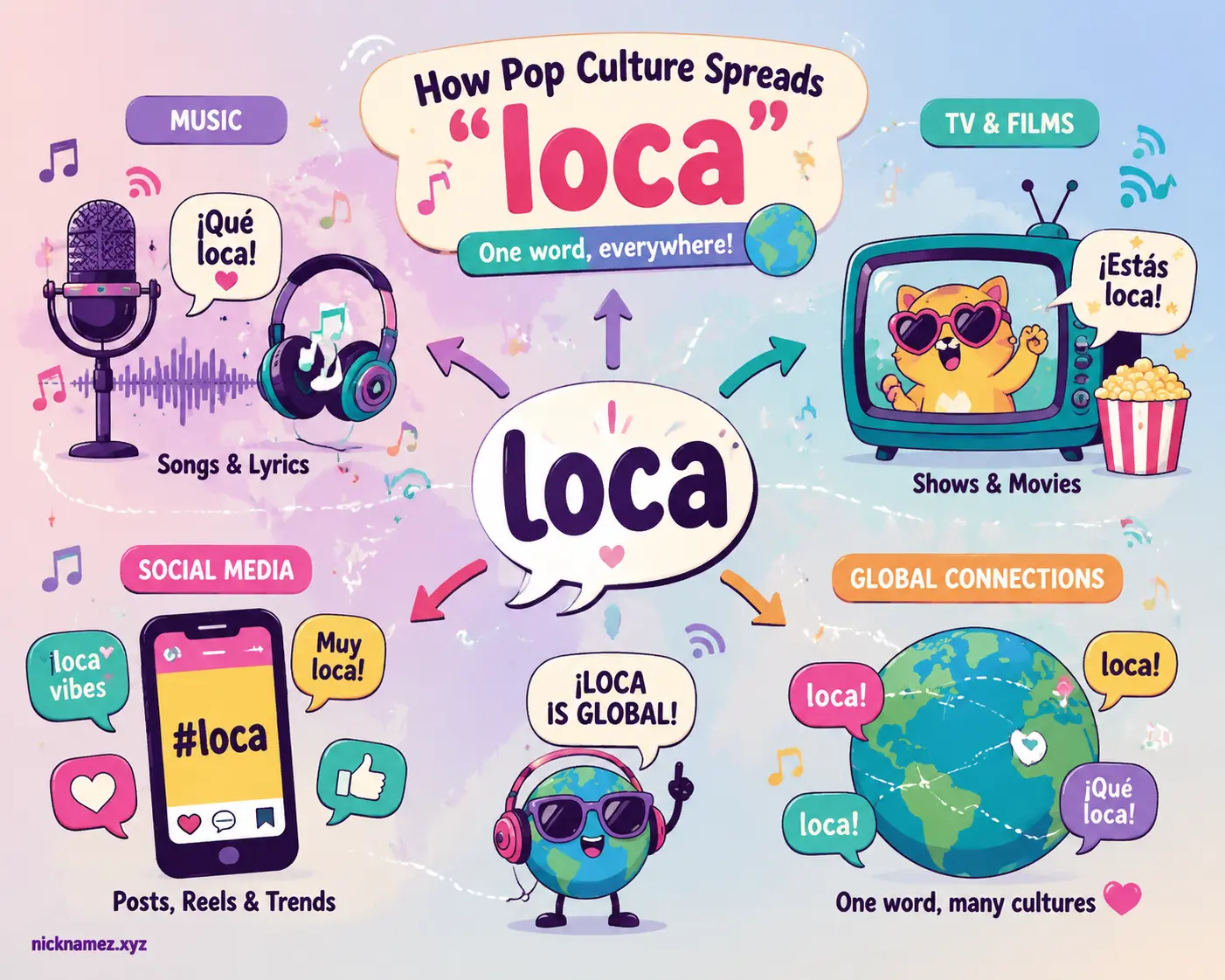
Internet culture loves emotionally dramatic words because they grab attention quickly. Calling your best friend “mi loca” online sounds playful and expressive. It creates a feeling of closeness and personality in just two words.
Memes also helped separate the term from its literal meaning. Today, many people use “loca” ironically or humorously. Someone posting a chaotic vacation story might caption it “vacation loca energy.” The word becomes shorthand for unpredictability and emotional intensity.
Globalization plays a huge role here too. Younger generations constantly borrow slang from different languages. Spanish expressions especially spread rapidly because of music, sports, streaming shows, and multicultural communities.
The result is fascinating: millions of people now use “loca” without fully understanding its cultural layers. Sometimes that creates funny misunderstandings. Other times it creates awkward or offensive moments when the speaker misjudges the context.
Different Ways People Use “Loca” in Daily Conversations
Playful and Friendly Usage
In many Spanish-speaking environments, “loca” can function almost like a playful nickname between friends. Imagine two best friends laughing loudly in a café. One tells an outrageous story, and the other responds, “Girl, you’re loca!” The tone is affectionate, not insulting.
This usage depends heavily on familiarity and emotional closeness. Friends who trust each other often exaggerate language for humor. English speakers do the same thing constantly. Calling someone “crazy” after hearing a funny story rarely feels offensive among close friends.
Here are some examples:
- “Estás loca”; “You’re crazy.”
- “Mi loca”; “My crazy girl.”
- “Eres una loca divertida”; “You’re a fun crazy person.”
The emotional flavor matters more than the literal translation. In these situations, “loca” often implies spontaneity, boldness, or emotional intensity rather than mental instability.
Still, context is everything. A playful tone can completely transform the meaning. Smiles, laughter, and body language soften the word dramatically. Without those signals, the same expression may sound harsh.
Romantic and Affectionate Usage
Romantic partners also use “loca” affectionately in many Spanish-speaking cultures. It can imply passion, emotional intensity, or irresistible attraction. Someone might say:
- “Estoy loca por ti”; “I’m crazy about you.”
- “Mi loca hermosa”; “My beautiful crazy girl.”
These phrases are emotionally charged and dramatic, which fits the expressive nature of many Romance languages. Spanish often embraces emotional exaggeration in ways English sometimes avoids.
Think of it like verbal fireworks. The word adds emotional color and intensity to relationships. It suggests someone is exciting, irresistible, unpredictable, or emotionally captivating.
That said, romantic usage depends heavily on mutual comfort. Some people love playful teasing. Others dislike being described with terms associated with instability. Modern conversations about respectful language mean speakers increasingly pay attention to how words affect different individuals.
Angry or Offensive Usage
Not every use of “loca” is harmless. In arguments, the word can become deeply insulting. Calling someone “loca” aggressively may imply irrationality, emotional instability, or lack of control.
For example:
- “Estás completamente loca”; “You’re completely crazy.”
- “No hables con esa loca”; “Don’t talk to that crazy woman.”
In these contexts, the word becomes judgmental and dismissive. It can minimize someone’s emotions or make them seem unreasonable. Tone sharpens the word like a knife.
This negative use explains why some people dislike casual use of “loca” altogether. Words connected to mental health can carry painful histories. What sounds funny to one person may feel hurtful to another.
That emotional tension is part of what makes “loca” culturally powerful. It exists in a gray area between affection and insult, depending entirely on human interaction.
How Context Changes the Meaning
Tone of Voice and Body Language
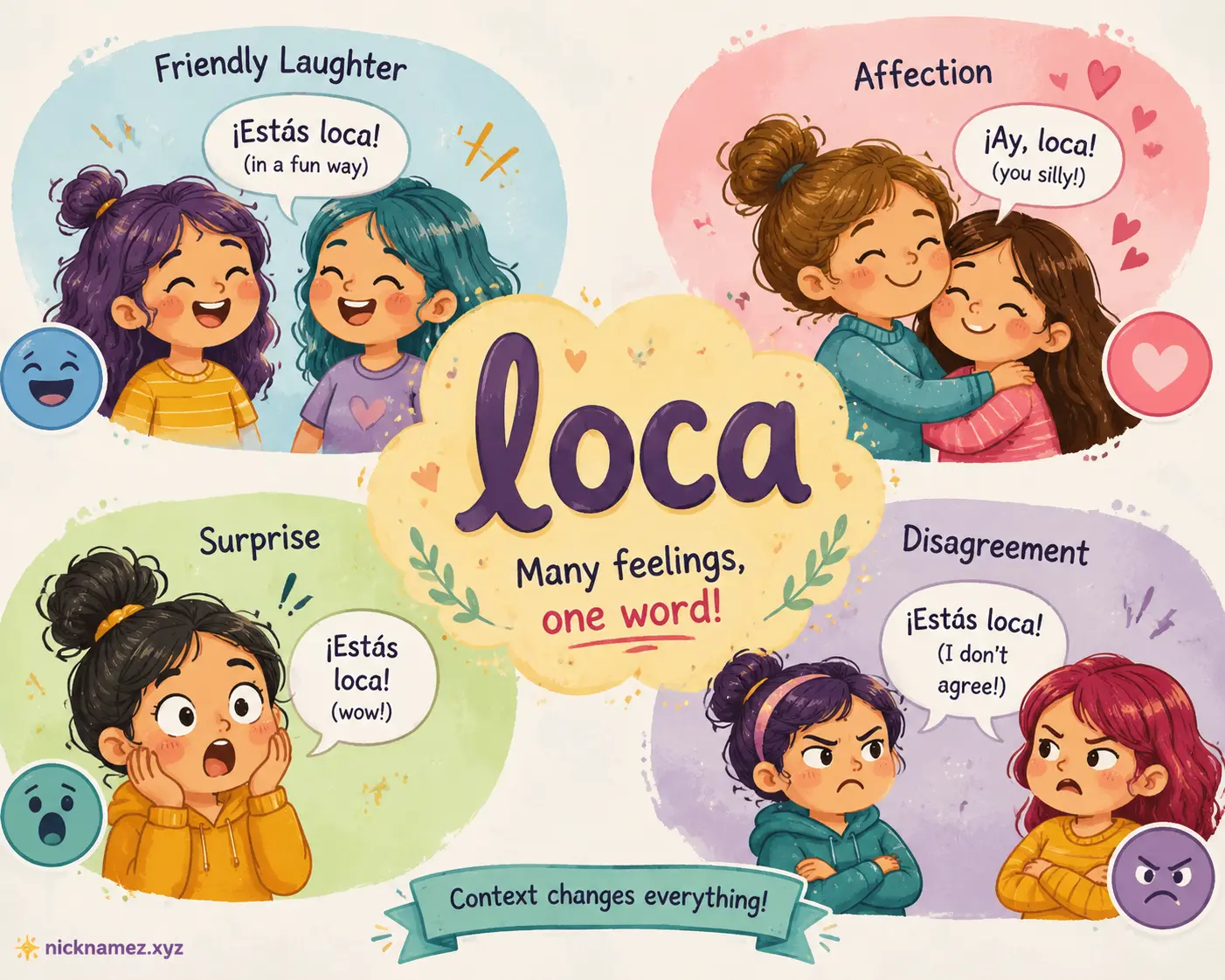
If there is one golden rule for understanding “loca,” it is this: context changes everything.
Imagine hearing the sentence “You’re crazy” in English. It can mean:
- “You’re hilarious.”
- “You’re reckless.”
- “You’re exciting.”
- “You’re irrational.”
The exact same thing happens with “loca.”
A smiling friend saying “Ay, loca!” during laughter sounds warm and playful. A stranger shouting “loca” during a fight feels aggressive. Tone acts like emotional seasoning. It completely changes the flavor of the word.
Body language matters too. Facial expressions, gestures, eye contact, and even timing shape interpretation. Spoken language is never just about vocabulary. Human communication is emotional theater.
That is why translations can sometimes fail. Direct dictionary definitions rarely capture emotional nuance. Someone learning Spanish from textbooks may understand the literal meaning of “loca” but still misunderstand how native speakers actually use it socially.
Regional Differences Across Spanish-Speaking Countries
Spanish varies enormously across countries. A word that sounds harmless in one region may sound offensive elsewhere.
In parts of the Caribbean, “loca” can function casually between friends. In more conservative settings, the same term may sound rude or disrespectful. Latin American slang especially changes quickly from country to country.
Here is a simplified overview:
| Region | Typical Tone |
|---|---|
| Caribbean Spanish | Often playful |
| Mexico | Context-dependent |
| Spain | Can be casual or insulting |
| Argentina | Frequently expressive |
| Formal settings | Usually inappropriate |
This variation explains why cultural awareness matters. Language is deeply connected to local customs and social expectations.
Common Situations Where You Hear “Loca”
Family and Friend Conversations
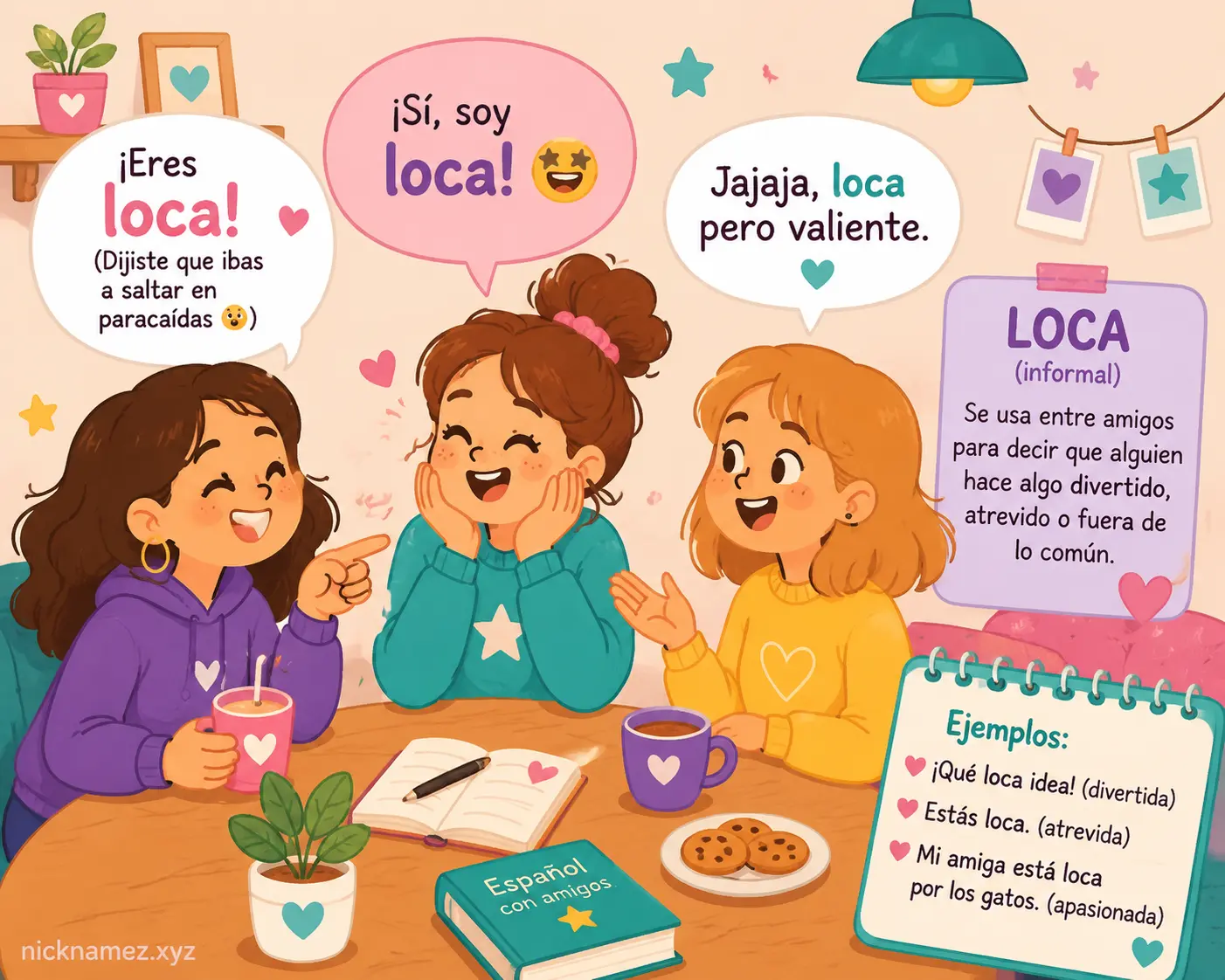
The most common place you hear “loca” is casual conversation between people who know each other well. Siblings tease each other with it. Friends joke with it. Cousins throw it into animated conversations naturally.
For example:
- “¿Dónde estabas, loca?”; “Where were you, girl?”
- “Ay, loca, cálmate”; “Girl, calm down.”
These phrases often communicate warmth and familiarity more than criticism.
Movies, Music, and Television
Entertainment helped normalize the word internationally. Songs, reality shows, and streaming series constantly expose audiences to expressions like “loca” and “loco.”
Even people with limited Spanish vocabulary often recognize the word instantly because of its strong media presence. That visibility helped transform it into global slang.
Similar Spanish Words and Related Expressions
Loco, Chiflado, and Desequilibrado
Spanish contains many related expressions for craziness or eccentricity:
| Word | Meaning | Tone |
|---|---|---|
| Loco/Loca | Crazy | Flexible |
| Chiflado | Nuts | Informal |
| Desequilibrado | Unstable | Serious |
| Maniático | Obsessed | Critical |
Each carries slightly different emotional weight.
Slang Variations and Nicknames
Spanish slang constantly evolves. Variations include:
- “Loquita”; little crazy girl
- “Locura”; craziness
- “Loquillo”; crazy guy
These softer forms often sound more affectionate.
Real-Life Examples of “Loca” in Communication
Positive Examples
Positive uses usually involve warmth, humor, or affection.
Examples:
- “Mi amiga está loca, pero la adoro.”; “My friend is crazy, but I adore her.”
- “Estoy loca por viajar.”; “I’m crazy about traveling.”
These phrases communicate enthusiasm rather than insult.
Negative Examples
Negative uses often appear during conflict.
Examples:
- “Esa mujer está loca.”; “That woman is crazy.”
- “No seas loca.”; “Don’t be ridiculous.”
These can sound dismissive depending on tone.
Should Non-Spanish Speakers Use the Word?
Non-Spanish speakers can use “loca,” but awareness matters. Language borrowed from another culture should be used thoughtfully. Casual use among friends may sound harmless, but using the term incorrectly can create awkwardness or offense.
The safest approach is understanding context before copying slang from music or movies. Words are cultural tools, not just vocabulary items.
Think of “loca” like fire. In the right setting, it creates warmth and energy. In the wrong setting, it burns.
Conclusion
The word “loca” is far more than a simple translation of “crazy.” It carries history, emotion, humor, affection, intensity, and cultural complexity all at once. Depending on tone and context, it can sound loving, playful, passionate, insulting, dramatic, or completely harmless.
Its journey from traditional Spanish vocabulary to global pop-culture slang shows how language evolves with society. Music, movies, social media, and everyday conversations transformed “loca” into an emotionally flexible expression recognized around the world.
Understanding the word means understanding something deeper about communication itself. Humans rarely speak in strict dictionary definitions. We speak through emotion, relationships, and context. “Loca” survives because it captures emotional energy in a way few words can.
Whether you hear it in a song lyric, a family conversation, or a joke between friends, the meaning always depends on who says it, how they say it, and why they say it.
FAQs
1. Does “loca” always mean crazy?
No. While the literal meaning is “crazy,” people often use it playfully, affectionately, or dramatically rather than literally.
2. Is “loca” offensive?
It can be. Among friends it may sound harmless, but during arguments or serious situations it can feel insulting or disrespectful.
3. What is the difference between “loco” and “loca”?
“Loco” is masculine, while “loca” is feminine. Spanish adjectives change depending on gender.
4. Why is the word so popular in music?
Songs and pop culture helped turn “loca” into a symbol of passion, excitement, and unpredictability, especially after Livin’ la Vida Loca became a global hit.
5. Can non-Spanish speakers use the word casually?
Yes, but understanding the cultural context is important because meaning changes depending on tone, region, and relationship.

American content creator and niche writer living in Spokane, Washington, age 26. Jasper enjoys researching emerging trends, digital tools, and educational resources while maintaining a balanced, evidence-based writing style. His background in online publishing helps him deliver useful, easy-to-understand articles for nicknamez.xyz, where he focuses on producing trustworthy content that helps readers make informed decisions.